
Favela Rocinha — the Living Metropolis on the Hillside
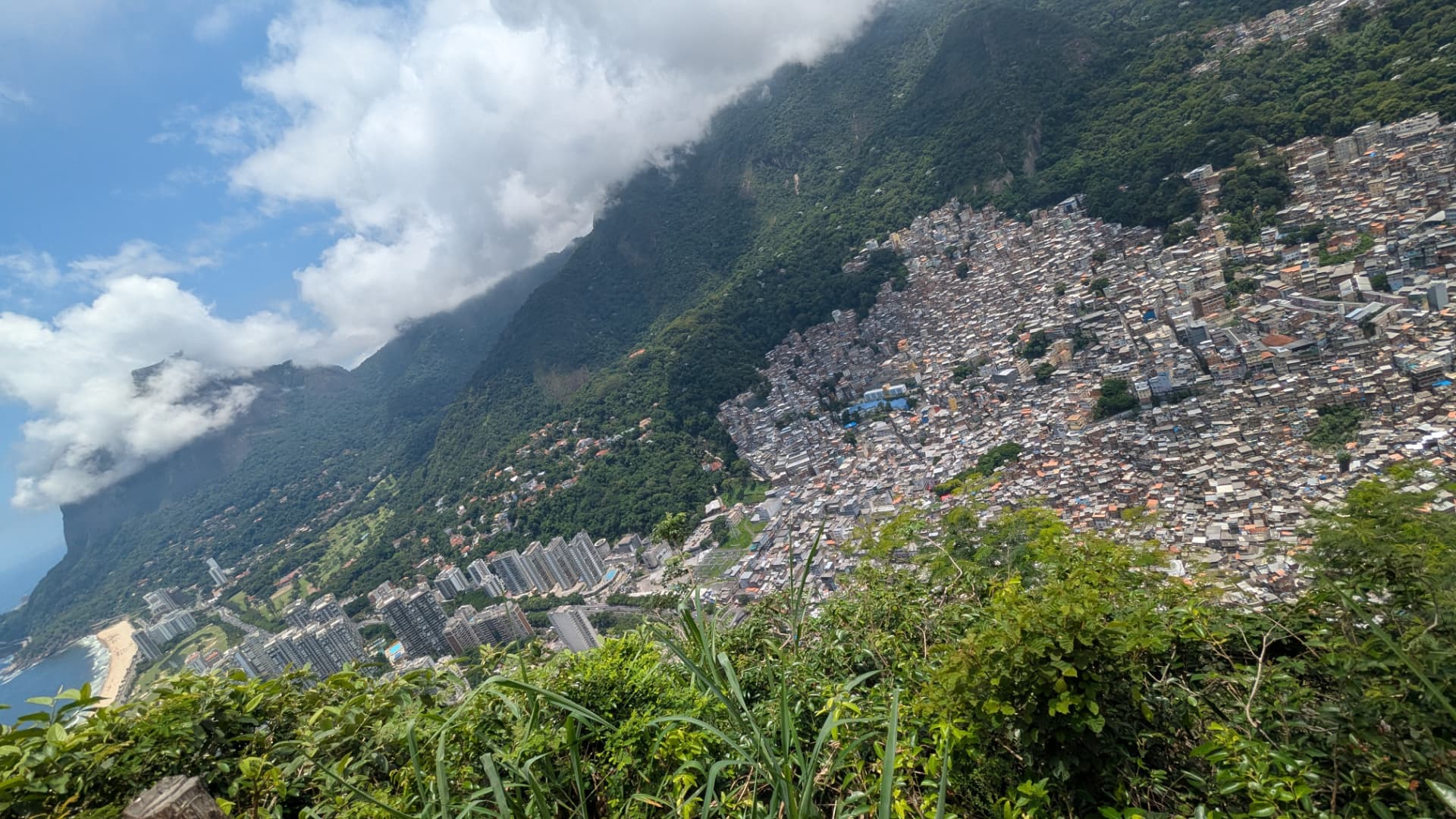
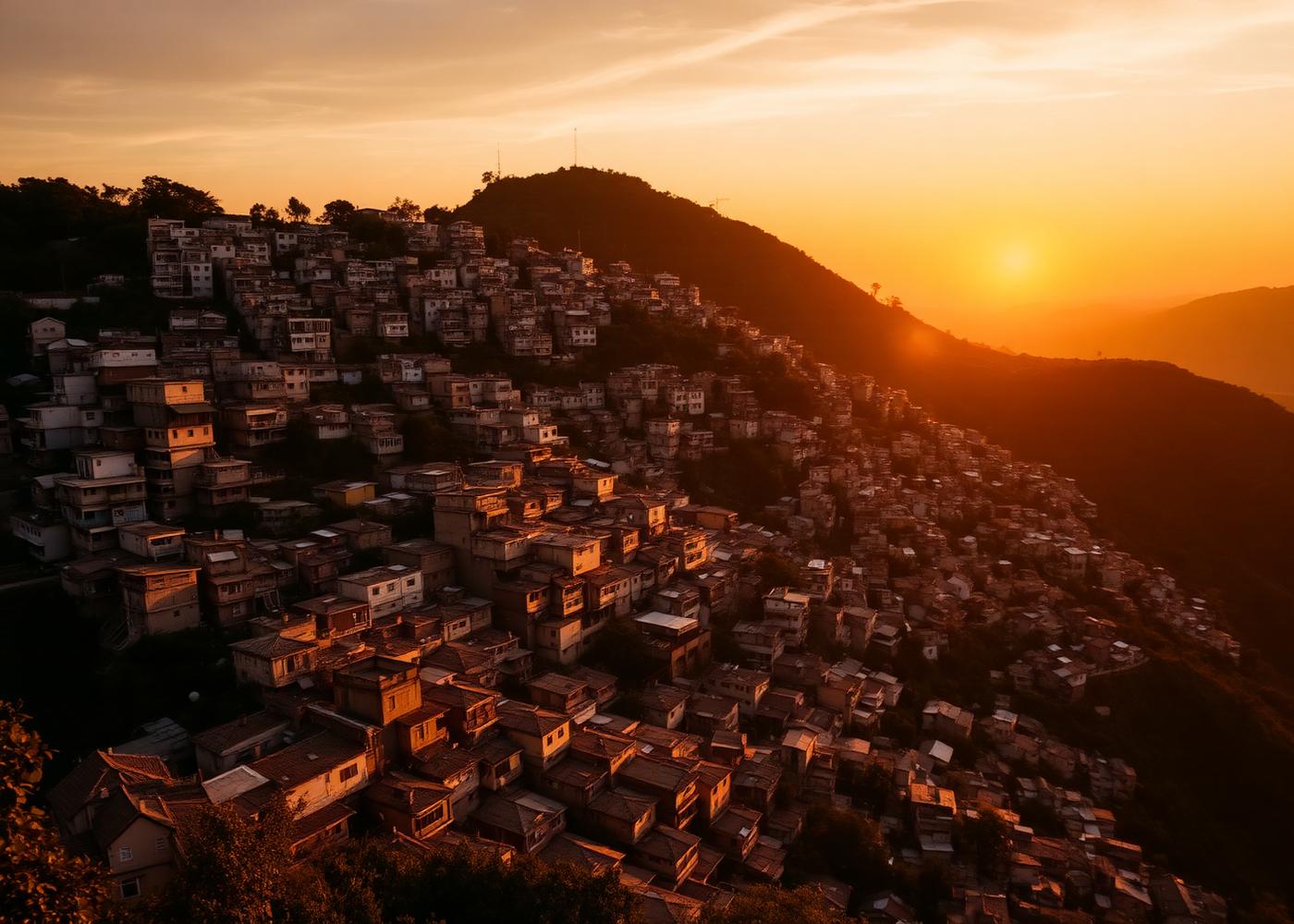
Between São Conrado and Gávea lies Rocinha, Brazil's best-known and largest favela. What looks from the outside like a single, densely built sea of hillside houses turns out, from within, to be a remarkably self-sufficient city with its own economy, culture and a neighbourhood that still surprises visitors today. This guide tells you what you should really know before a visit — respectful, practical and free of clichés.
- Location
- Zona Sul, Rio de Janeiro
- Population
- ~ 100,000+
- Founded
- 1930s
- Local Peak
- Morro Dois Irmãos
Where is Rocinha?
Rocinha lies in the southern part of Rio de Janeiro, tucked into a steep mountain saddle between the affluent districts of São Conrado to the south and Gávea to the north. Above the community rises Morro Dois Irmãos, the striking twin peak that also towers over the neighbouring community of Vidigal. The main artery is the Estrada da Gávea, a narrow, winding road that snakes from the Zuzu Angel Tunnel up to Alto da Boa Vista.
Via the Rebouças Tunnel and the Lagoa-Barra highway, Rocinha is reachable within 15 to 30 minutes from Ipanema, Leblon, Copacabana or Barra da Tijuca. Bus lines and numerous kombis (shared vans) connect the community directly with the districts of the Zona Sul. Rocinha has no metro station of its own — the nearest one is in São Conrado, within walking distance of the lower entrance.
Size and Distinctive Features
Rocinha is Brazil's largest favela, with population estimates ranging from 100,000 to over 200,000 residents — depending on the source and counting method. That makes Rocinha larger, in population terms, than many small German towns. The neighbourhood stretches vertically over hundreds of metres in elevation and horizontally across several square kilometres. Unlike many smaller favelas, Rocinha has its own bank branches, supermarkets, radio stations, dental clinics, travel agencies and even its own gyms. That's precisely why it is often described as a "city within a city".
Rocinha, Zona Sul · Rio de Janeiro · Brazil
Coordinates: −22.988°, −43.250°
Placeholder for an interactive map.
The History of Rocinha
Origins as a Rural Settlement
The name "Rocinha" derives from the Portuguese roça — the small field. In the early 20th century, the area was a farmed hillside where smallholders grew vegetables and fruit for the markets of nearby São Conrado and Gávea. From the 1930s, the first families settled permanently, many of them labourers who found work on the construction sites of the growing city.
Rapid Growth from the 1950s
With the construction of the Zuzu Angel Tunnel in the 1960s and rising demand for labour in the Zona Sul, Rocinha grew explosively. Migrants from Brazil's Northeast — fleeing drought and a lack of prospects — built houses of wood, tin and later brick and concrete. Within a few decades, the former roça had become one of the densest residential areas in Latin America.
Urbanisation and Recognition
In 1993, Rocinha was officially declared a district (bairro) of Rio de Janeiro — a symbolic but important step away from the status of "informal settlement". In the years that followed, city and federal government invested in basic infrastructure: electricity, water pipes, sewage systems, some paved paths, a library and sports centre, and the striking pedestrian bridge by architect Oscar Niemeyer, which spans the Estrada da Gávea.
Significance Within Rio
Today, Rocinha is an important point of reference for Rio not only because of its size, but because so much originated here first: the Zona Sul's first community radio stations, an early-established neighbourhood association, its own Carnival blocos, and a growing number of internationally visible cultural projects. Readers who want to dig deeper will find context in our planned feature on the history of the favelas.
Rocinha Today
A City Within a City
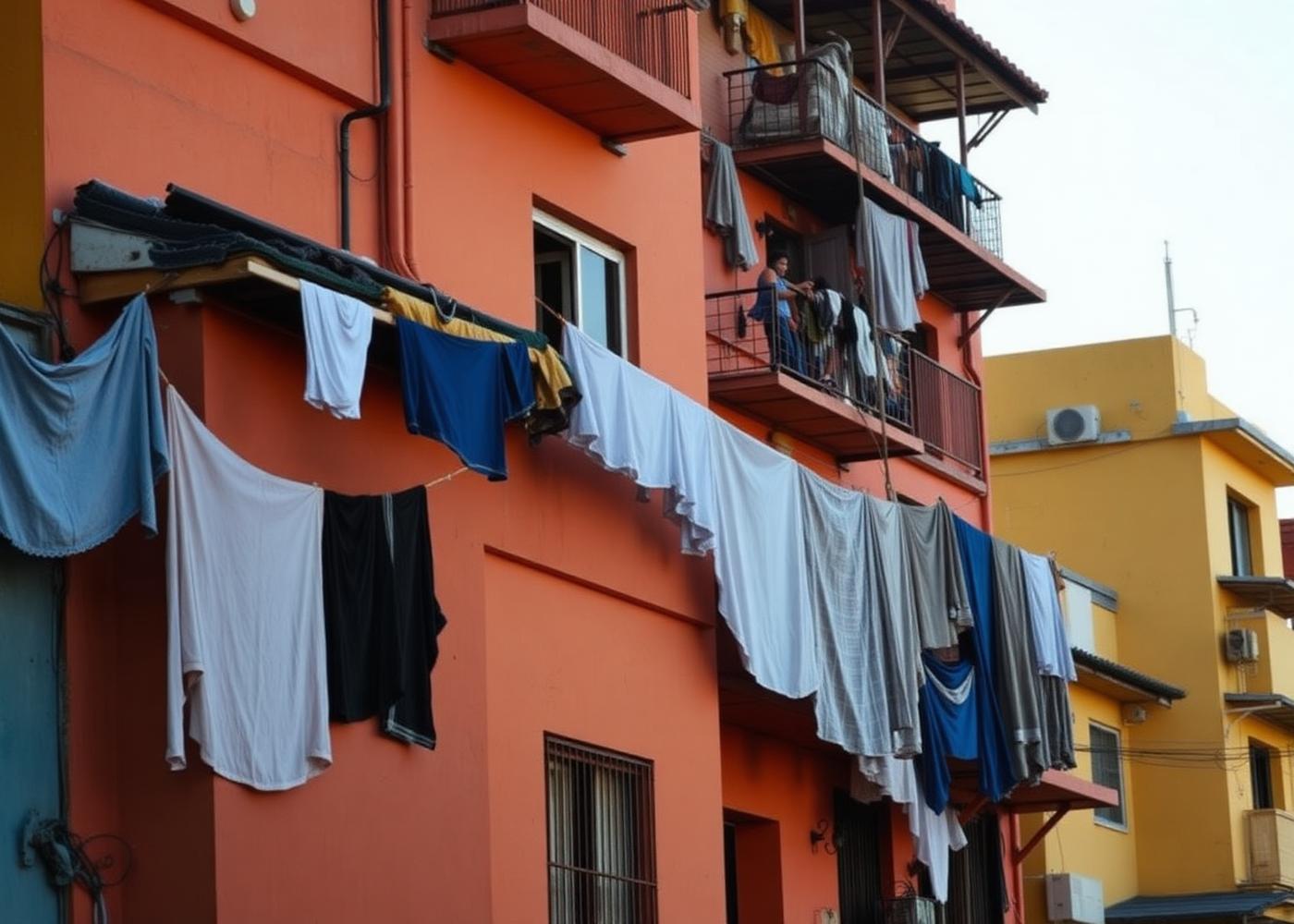
In many respects, Rocinha functions like a self-contained small town. Within the community there are bank branches, several supermarkets, bakeries, pharmacies, opticians, workshops, phone-repair shops, travel agencies and even dental practices. Numerous small businesses — from hair salons to sewing studios — are firmly rooted in the neighbourhood. Anyone who takes an afternoon to walk up the main artery, Rua Um, experiences a market street that pulses like almost nowhere else in Rio.
Infrastructure, Education and Health
Public schools, daycare centres and several health posts (Clínicas da Família) serve everyday life. This is complemented by community projects offering tutoring, music lessons, ballet, capoeira, football and digital skills training. Connections to the city's transport network are also considerably better than in many other communities: buses, kombis and motorbike taxis run every few minutes.
Gastronomy and Services
Rocinha has a surprisingly lively food scene. Alongside classic botequins and lanchonetes, recent years have seen cafés, pizzerias, sushi restaurants and vegetarian spots establish themselves. Street kitchens serve acarajé, coxinha, pastel, grilled skewered meat and tropical juices. On weekends, many bars are busy — Rocinha is not just a place to live, but also a nightlife destination for its own residents.
Culture and Community
Music: Samba, Pagode and Baile Funk
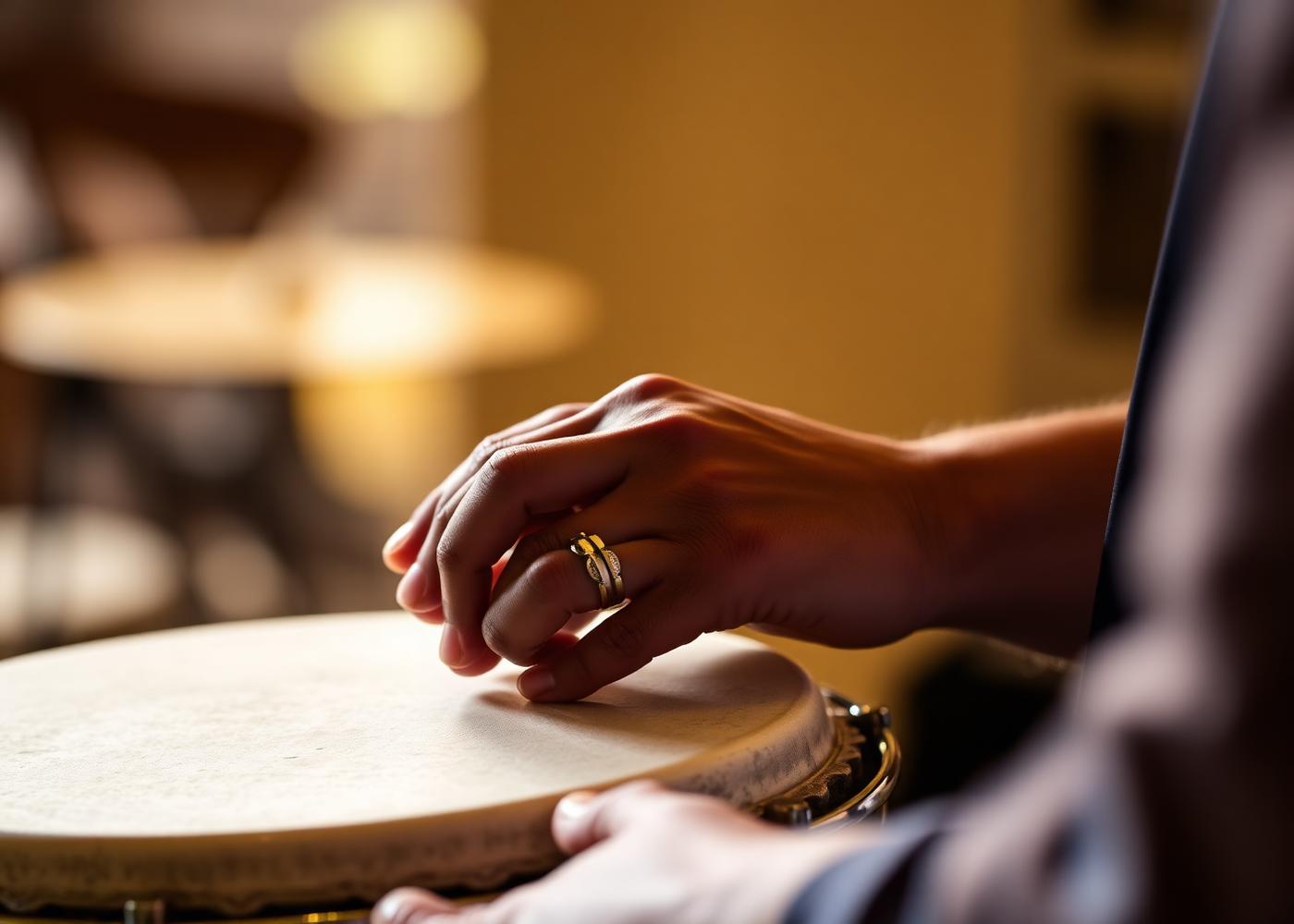
Rocinha is one of the central cradles of baile funk, that uncompromising electronic dance music from Rio that is now heard around the world. DJs and producers from Rocinha play from New York to Berlin, while within the community itself the classic bailes continue to define Friday and Saturday nights. Alongside this, samba de raiz, pagode and choro keep older traditions alive.
Art, Sport and Local Projects
On many of Rocinha's walls, murals tell the stories of everyday heroes, music icons and the community's history. Sports projects promote football, boxing, jiu-jitsu and surfing — the waves of São Conrado are just minutes away on foot and have produced an entire generation of young surfers. For a deeper dive, we recommend our planned feature on the culture of the favelas.
Festivals and Community Life
Rocinha has its own street-carnival bloco, celebrates the titles of football club Flamengo at full volume, and marks religious festivals that blend Catholic tradition with Afro-Brazilian rituals. Anyone who happens to pass by on a Sunday with live roda de samba playing quickly understands why the word "community" here is anything but a marketing term.
Sights in Rocinha
Mirante da Rocinha / Laboriaux
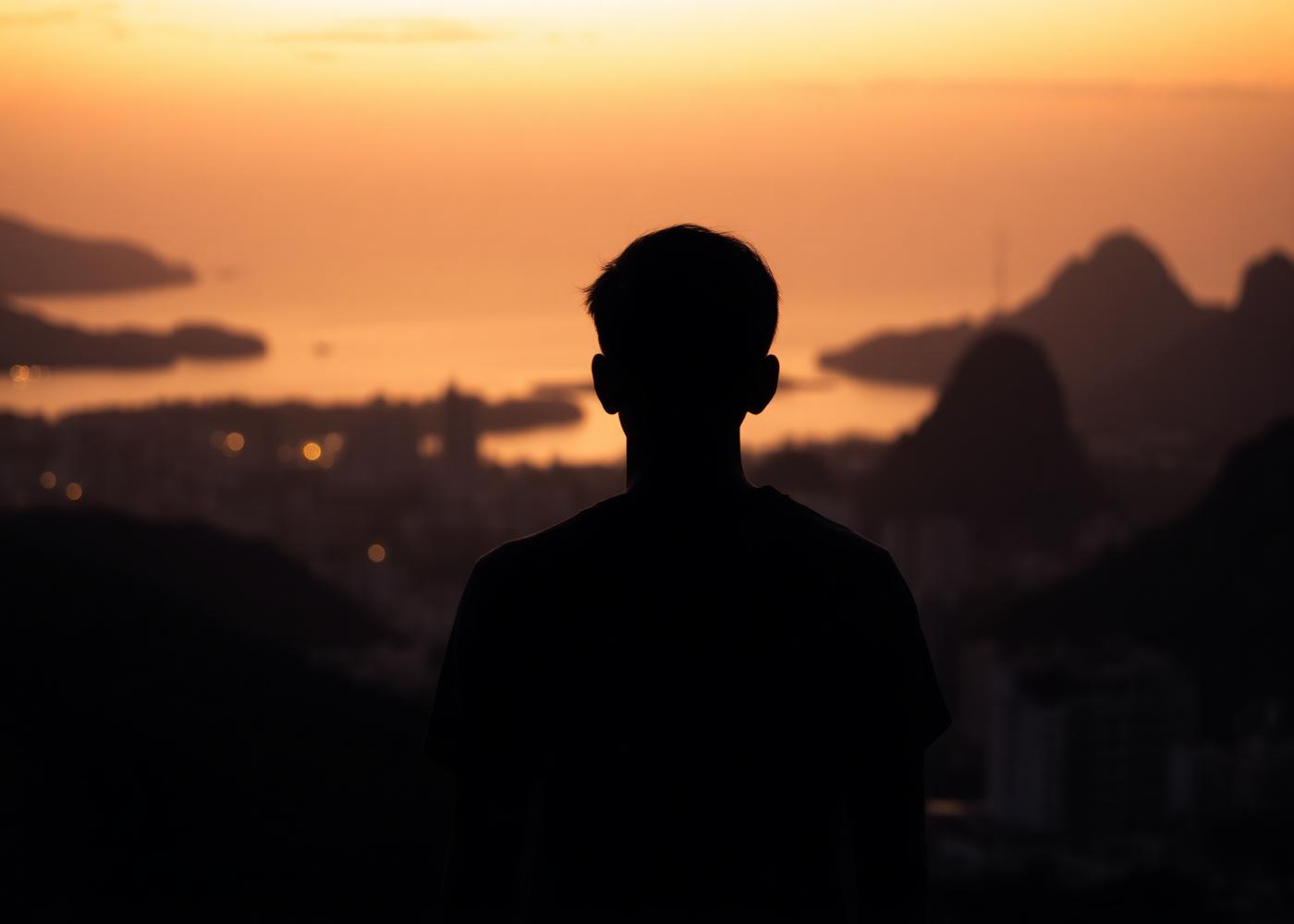
The highest area of Rocinha — Laboriaux — offers an unobstructed view of the Atlantic, the beach at São Conrado and the silhouette of Pedra da Gávea. On clear days, the view ranks among Rio's most impressive. The climb is usually made by motorbike taxi.
Rua Um
Rua Um is Rocinha's central axis: market street, neighbourhood meeting point and lifeline all in one. Bakeries, electronics shops, small boutiques and street kitchens line the way. A walk along this street is the best introduction to the community's daily life.
Local Markets and Street Markets
On set weekdays, Rocinha hosts feiras — street markets with fresh fruit, vegetables, fish, herbs and household goods. Prices are lower than in the Zona Sul's supermarkets, and the selection is considerably more diverse.
Art Projects and Cultural Centres
Several cultural and social centres, such as the Casa da Cultura and various NGO-run art initiatives, offer space for workshops, exhibitions and concerts. Many happily welcome visitors by prior arrangement — guides can help make the connection.
Oscar Niemeyer's Pedestrian Bridge
The curved pedestrian bridge Passarela de Rocinha spans the Estrada da Gávea and is one of architect Oscar Niemeyer's last works. It connects two parts of the community and is a frequently photographed landmark.
Safety in Rocinha
Safety is the topic that concerns travellers most before a visit. We treat it here factually. Rocinha is an inhabited community — not a restricted zone and not a leisure backdrop. As in any big-city neighbourhood, there are local rules that visitors should respect.
Which Areas Tourists Usually Visit
The vast majority of tourist activity is concentrated on the main axis (Estrada da Gávea and Rua Um), on Niemeyer's pedestrian bridge, on Laboriaux as a viewpoint, and on a small number of selected art and cultural projects. Anyone turning further into side alleys should only do so with local context — not out of fear, but out of courtesy towards residents.
Recommended Behaviour
- Greet the people you meet — a friendly "bom dia" or "boa tarde" opens doors.
- Carry valuables discreetly, and leave expensive jewellery and large cameras at your hotel.
- Ask permission before photographing people, children or private houses.
- Pay attention to hints from local guides or residents about which streets are currently best avoided.
- Avoid casting yourself as an "observer" — you are a guest, not a journalist.
Time of Day and Current Situation
The best window for a visit is late morning to early afternoon. After dark, the same rule applies as everywhere in Rio: don't go out alone or without local knowledge. The safety situation in Rocinha can change at short notice — take your cues from your accommodation, your guide, or current official travel advisories.
Note: the safety situation in Rio de Janeiro can change at short notice. Before visiting, inform yourself of current local advice, follow the recommendations of your accommodation or guide, and observe official travel warnings. A forthcoming feature on Inside Favela on "Safety in Rio de Janeiro" will summarise ongoing developments.
How to Visit Rocinha
There are several ways to reach Rocinha — each with its pros and cons. Almost every visit begins either at the lower entrance in São Conrado or the upper entrance in Gávea.
A guided tour combines transport, translation, context and orientation. Fair operators work in partnership with local residents.
Demanding without prior knowledge. Feasible for travellers with some Portuguese and experience in Rio, especially along the main axes.
No problem to the lower entrance; many drivers are reluctant to go into the inner areas. Uber is often cheaper and transparent.
City bus lines stop directly at Rocinha. Inside the community, kombis (shared vans) quickly carry travellers and residents up the Estrada da Gávea.
The fastest and most typical way to get around inside Rocinha. Drivers wait at fixed points.
The best way to experience Rocinha — but steep, loud and at times hard to navigate. Sturdy shoes and plenty of water are essential.
Guided Tours
A guided tour pays off above all if you want to see Rocinha not merely as a backdrop, but understand it as a living community. Good local guides are residents themselves. They explain history and daily life, take you to street-art projects, studios and neighbourhood initiatives, and translate conversations on the ground.
Typical Benefits of a Good Tour
- Local knowledge of history, everyday life and community politics.
- Orientation in a neighbourhood without conventional street signs.
- Direct support for local guides, cafés and cultural projects.
- A language bridge between international guests and residents.
- Safety context regarding current local conditions.
When choosing a tour, make sure guides work in or closely with the community, and that part of the price transparently supports local projects. We do not recommend pure "jeep safari" offers, in which groups are driven through without any contact with residents.
Guided tours through Rocinha will in future be arranged directly via Inside Favela. We are currently working with local guides to make fair and respectful offerings transparently bookable. Once the system is live, you'll find the corresponding booking link here.
Food and Drink
A small, subjective selection of typical addresses and offerings:
- Botequins along Rua Um — classic neighbourhood bars with cold chopp, petiscos and live music on weekends.
- Street kitchens and grills — for coxinha, pastel, grilled meat, acarajé and tropical juices.
- Cafés and bakeries (padarias) — for an early coffee, pão de queijo, pão na chapa and freshly squeezed orange juice.
- Pizzerias, sushi and vegetarian options — Rocinha has long had a surprisingly international cuisine, often at prices well below those of the Zona Sul.
- Classic Brazilian dishes — feijoada on weekends, arroz e feijão with beef or chicken, moqueca, farofa, and brigadeiro as a sweet finish.
Opening hours and offerings may change. If in doubt, ask your accommodation or guide for current recommendations.
Viewpoints
Rocinha offers some of the most unobstructed views in Rio. Three particularly rewarding perspectives:
- Laboriaux — the highest inhabited area, with views over the Atlantic, São Conrado and Pedra da Gávea. Especially striking at sunset.
- Terraces along the upper paths — several small bars and restaurants open their rooftop terraces to guests, often for the price of a drink or snack.
- View of Niemeyer's passarela — a piece of architectural history at the heart of the community, surrounded by houses and market life.
Sustainable Tourism
Rocinha is not a museum. Every visit has an effect on the neighbourhood — and you can help decide whether that effect is positive.
- Be respectful: greet people, ask before taking photos, respect private spaces. Residents are not "subjects".
- Support local businesses: eat at local botequins, buy souvenirs directly from craftspeople and artists, use the community's motorbike taxis and kombis.
- No sensationalist photography: do not post recognisable photos of people without consent — especially not of children.
- Respect privacy: houses, interiors and private yards are not photo subjects — they are people's homes.
- Choose fair operators: pick guides and tours that work transparently with the community and pay fair wages.
Practical Information
- Best Time to Visit
- April to October (drier months). Within the day: late morning to early afternoon. The sun is intense year-round.
- Recommended Duration
- 2 to 4 hours for a first impression. With a full tour, lunch and a cultural visit, half a day to a full day.
- Clothing
- Comfortable, sturdy shoes with good tread. Unobtrusive clothing that doesn't make you feel like a display of wealth. Sun hat and sunscreen.
- Payment
- Many small shops accept only cash (Real, BRL) or Pix. Bring exact change where possible.
- Internet and Phone
- Mobile networks are generally stable; Wi-Fi is available in cafés and hostels. A Brazilian SIM or eSIM makes motorbike-taxi apps and translation easier.
- Language
- Portuguese. English is spoken here and there, German rarely. A few polite phrases ("bom dia", "obrigado/a", "com licença") are much appreciated.
- Weather
- Warm to hot year-round. From December to March, brief but heavy showers are more frequent. Steep paths in Rocinha become slippery quickly when wet.
- Opening Hours
- Shops are usually open Mon–Sat 8am–8pm, with many bars and restaurants staying open later. Reduced offerings on Sundays.
All details are provided without guarantee — opening hours, prices and local recommendations can change. Please check the current situation again once you are on the ground.
Common Misconceptions About Rocinha
"Rocinha is only dangerous."
Rocinha is, first and foremost, a residential neighbourhood where more than 100,000 people live, work, go to school, celebrate and raise their children. There are areas and times when visitors shouldn't be out and about — but that's true of many neighbourhoods worldwide. Portraying it simply as a "dangerous place" does not do justice to the community's daily life.
"Only poor people live there."
Rocinha is far more socially diverse than the stereotype suggests. Alongside poorer families, it is home to skilled workers, students, craftspeople, the self-employed and a growing middle class. Many residents could afford to move away — but stay because their social network, their business and their home are here.
"So this is what daily life looks like."
Daily life in Rocinha is shaped by work, family, school, sport and culture — just as in any other neighbourhood. The specific challenges lie in the infrastructure, the steep paths, and the historically entrenched inequality relative to the surrounding districts.
"Why do people visit Rocinha?"
Because an understanding of Rio remains incomplete without Rocinha. Because part of Brazilian culture, music and economy takes shape here. And because respectful tourism helps people from abroad see the community not merely as a statistic, but as a neighbourhood with faces and stories.
Frequently Asked Questions
Is Rocinha safe for tourists?
Can you visit Rocinha alone?
What tours are available in Rocinha?
How big is Rocinha?
How many people live in Rocinha?
What does a tour through Rocinha cost?
Can you eat in Rocinha?
Is photography allowed in Rocinha?
How do you get to Rocinha?
Exactly where is Rocinha located?
How much time should you plan for a visit?
What should you wear?
Can you pay by credit card?
Do I need to speak Portuguese?
Can you stay overnight in Rocinha?
Is there a cash machine in Rocinha?
What should you do in an emergency?
What is the Passarela de Rocinha?
Is Rocinha child-friendly for travellers?
How does Rocinha differ from Vidigal or Santa Marta?
Conclusion
Rocinha is a neighbourhood you won't understand in an hour — but one you start to respect after a very short time. Anyone who takes the time, greets people warmly, and sees the community not as an attraction but as a living neighbourhood, will get a great deal back from the visit: genuine hospitality, one of Rio's most unobstructed views, good food, and a deeper understanding of the city's many layers.
A visit to Favela Rocinha is not adventure tourism. It is a city walk — through Rio's largest and loudest community, one that is proud of its history, open to guests, and practised at explaining itself. That is exactly why it's worth it.
Other Favelas and Topics
- Vidigal — the Balcony Over the Atlantic
- Morro dos Tabajaras — Copacabana's Quiet Neighbour
- Babilônia — Cradle of Partido-Alto Samba
- Chapéu Mangueira — Steep Lanes With a Sugarloaf View
- Santa Marta — Colours, Samba and Michael Jackson
- Cantagalo / Pavão-Pavãozinho — Where the Metro Meets the Hill
- Complexo do Alemão (coming soon)
- History of the Favelas (coming soon)
- Safety in Rio de Janeiro (coming soon)
- Culture of the Favelas (coming soon)
- Favela Tours in Rio (coming soon)
More About Rocinha
How samba was born in the morros
From a backyard in Estácio to the world stage: a short history of the rhythm that holds Rio together.
Porta do Céu drone video in Rocinha – how a viral clip brought the world into a favela
An unremarkable rooftop in Rocinha became one of Rio’s most photographed spots through Instagram, TikTok and drone videos – with all the opportunities and challenges.