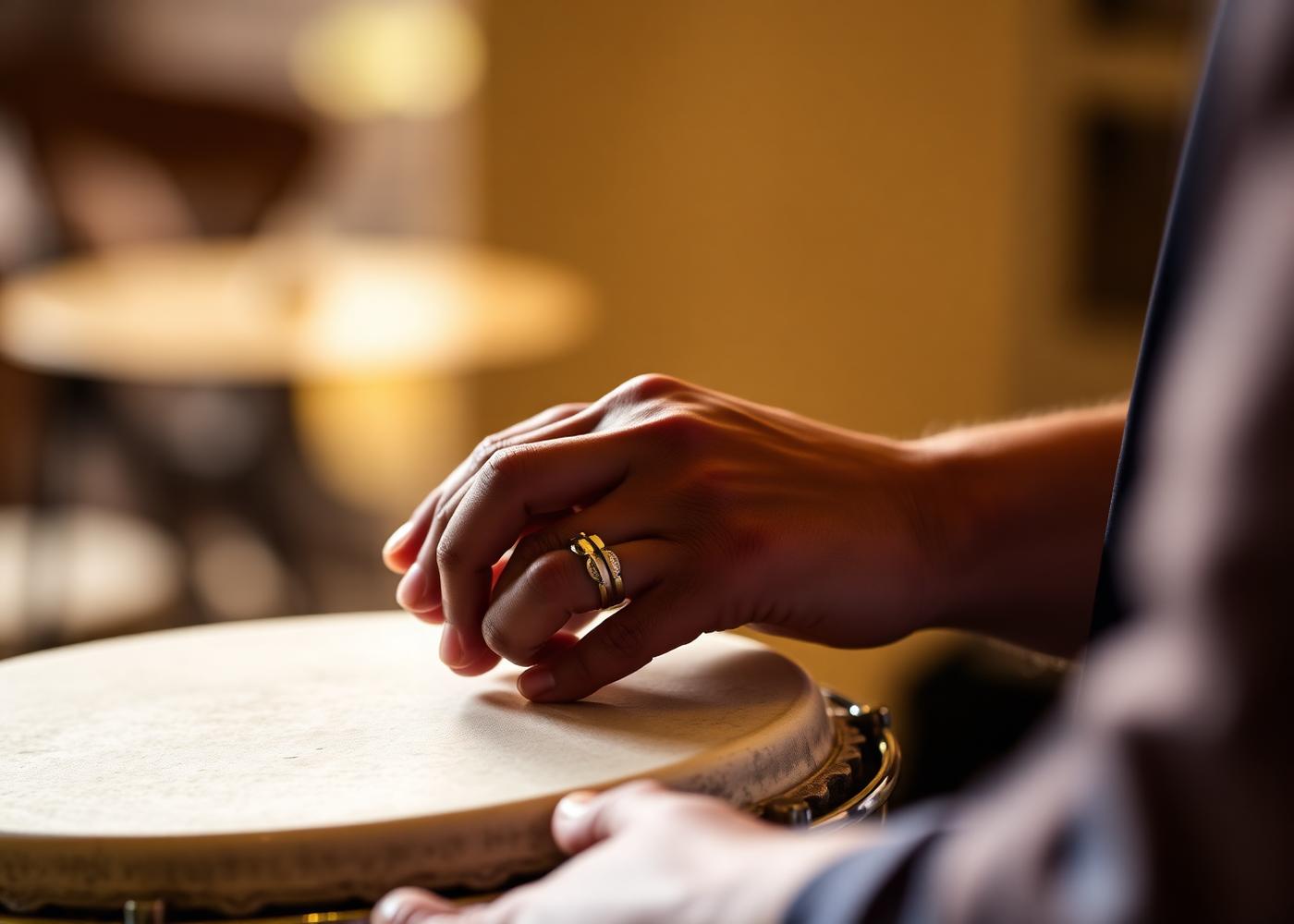
Baile Funk Roots in Cantagalo — More Than Just Music
How a community helped shape Funk Carioca, and why Baile Funk is heard around the world today.
From the Bailes Black to Miami Bass to the legendary Baile Funk parties in the communities of Rio de Janeiro.
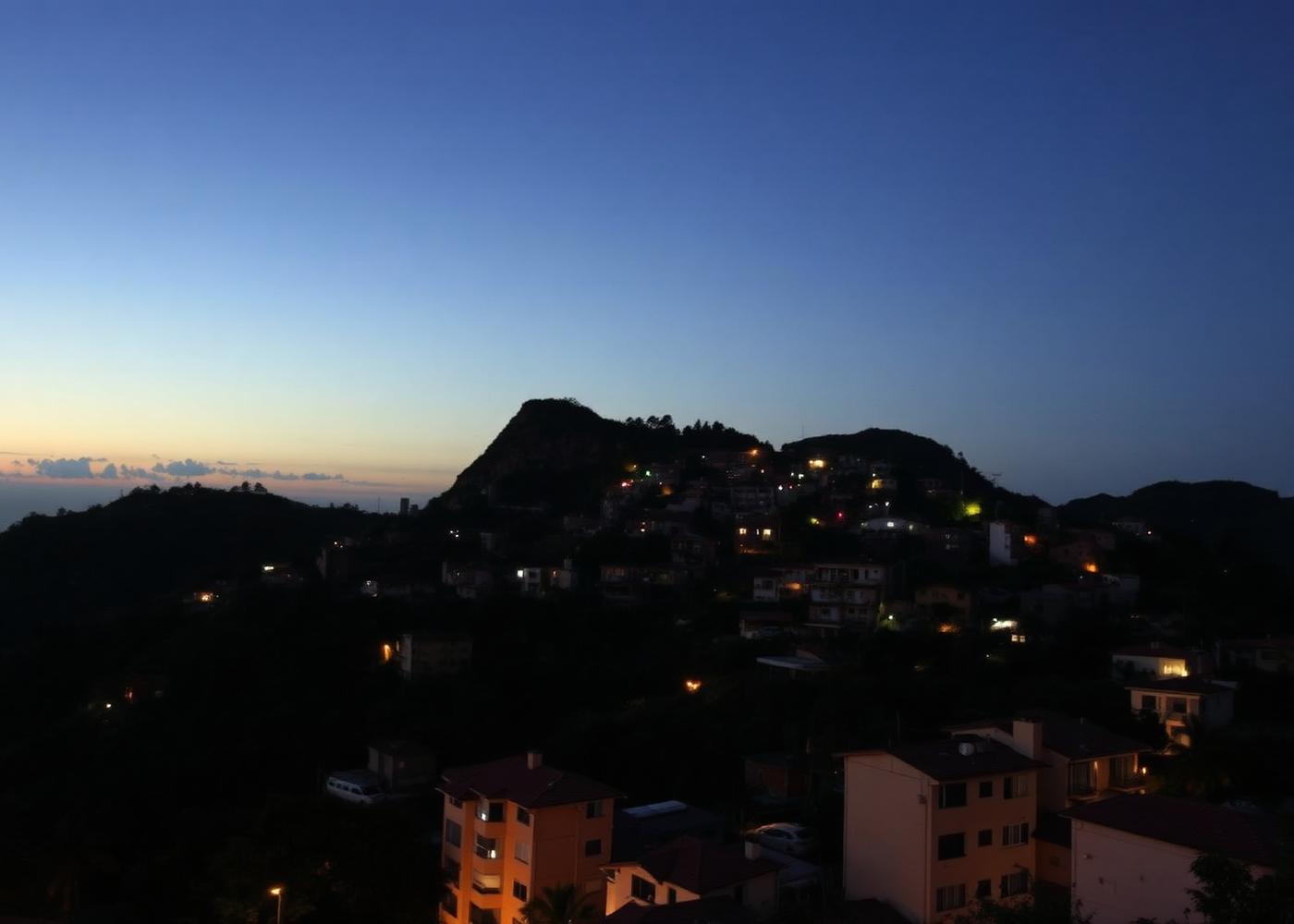
Anyone walking through Rio de Janeiro on a weekend hears it eventually: a bass that lands in the chest rather than the ear. It comes from a car, from a phone speaker, from a bar, from a window up on the hillside. Funk Carioca is the sound of this city — alongside samba, bossa nova and pagode, and for many young people it has long overtaken them.
At the same time, few Brazilian musical forms have been so frequently misunderstood. Abroad, Baile Funk is often reduced to two images: sexuality and violence. Both images fall short, and both say more about the outside gaze than about the music itself.
This article tells the other story: a story of dance events, imported records, homemade speaker walls, DJs with samplers, young people with choreographies, and communities that created their own public sphere. And it tells the role played in this by Cantagalo and the neighbouring Pavão-Pavãozinho — without inventing legends.
What Is Baile Funk?
"Baile" simply means "dance event" in Portuguese. "Baile Funk" is therefore initially nothing more than: the party at which funk is played. In Brazil itself, people more often speak of "baile" and call the music "funk" or "funk carioca" — "Baile Funk" as a genre name is mainly an international coinage.
Musically, Funk Carioca is an electronic dance style: programmed beats, very prominent low frequencies, short recurring rhythmic figures, plus singing or rapping from an MC. Recognisable patterns, used and varied by thousands of productions over the years, are characteristic — similar to riddims in Jamaican dancehall.
Socially, a baile is far more than a concert. It is meeting point, catwalk, dance floor, news exchange and stage for newcomers. For many young people it was and is the place where you meet someone at the weekend, where you show what you can dance, and where you belong.
The Origins: Bailes Black of the 1970s
The story does not begin with basslines from speaker walls, but with records. In the late 1960s and the 1970s, soul and funk records from the US reached Rio de Janeiro — via record shops, via sailors, via private imports. DJs and organisers began holding dance nights with them.
These "Bailes Black" were not niche events. In clubs, sports associations and halls in the Zona Norte and Zona Oeste, thousands of young people came together every weekend. There were light shows, projections, competitions, hosting — a whole event economy with crews who owned and transported their own equipment.
These crews, the "equipes de som", are key to understanding this history. They were organisers, technicians, curators and brand all in one. Whoever owned a sound system had a say in what was played. This structure — music tied to a crew and its equipment, not to a band — has shaped funk to this day.
An important point for the historical record: the Bailes Black mostly did not take place in favelas, but in commercial dance halls and club premises. The close connection between funk and communities that came later developed only over decades — and for political, not musical, reasons.
Intended for a licensed archive photo or an image from a cultural collection. Not an AI-generated image posing as a documentary photograph.
Soul, Funk and Black Rio
"Black Rio" was the name the press and the scene gave to the movement that formed around these bailes. It was music — but equally fashion, language, hairstyle, attitude. Young Black Cariocas drew on US soul and civil-rights iconography and translated it into a Brazilian context, in which the myth of a "racial democracy" had long rendered social inequality invisible.
That is precisely why Black Rio was political, even without a party programme. During a period of military dictatorship, large gatherings of young Black people were regarded as worth watching. There was suspicion, reporting with a warning undertone, and occasional controls — a pattern that would repeat itself decades later with Bailes Funk.
Musically, Black Rio worked in two directions: Brazilian soul and funk productions emerged, and an audience developed that was used to danceable, bass-heavy, DJ-driven nights. Both were prerequisites for everything that followed. Anyone wanting to understand Rio's cultural history will find a parallel here to the emergence of samba — read more in our article "How Samba Was Born in the Morros".
„First came the audience, then the sound of its own. Funk Carioca emerged from a dance culture, not from a studio."
The Influence of Miami Bass
In the 1980s the music at the bailes changed. Electro, early hip-hop and above all Miami Bass from Florida arrived in Rio via records and cassettes. Miami Bass was built for dance floors: fast tempos, deep Roland TR-808 basslines, clear rhythmic figures, no excess.
Rio's DJs did not simply adapt this music — they reworked it. They cut instrumental versions, layered loops, extended passages and added Portuguese lyrics on top. Certain instrumental patterns from this period became standard foundations in Rio, on which countless versions were built.
Out of this practice grew the idea of "montagem": a track is not sacred, it is material. This attitude — music as something assemblable, changeable, made for the specific dance floor — remains to this day the productive aesthetic core of Funk Carioca.
By the end of the 1990s, the sound had noticeably broken away from its US models: with percussive sample sets known as "tamborzão", a sonically independent, more Brazilian-percussive foundation emerged.
Intended for self-produced rhythm examples or licensed excerpts. No embedding of copyrighted recordings without rights clearance.
DJ Marlboro and the Nationalisation of Funk Carioca
If one person is repeatedly mentioned in the history of Funk Carioca, it is Fernando Luís Mattos da Matta — DJ Marlboro. He came from the baile scene, worked as a DJ and producer, and combined the production tools of Miami Bass with Brazilian lyrics and themes.
The compilation "Funk Brasil", released in 1989, is considered a milestone: it presented funk from Rio as its own genre, with its own MCs and Portuguese-language lyrics, not as an imitation. From here, funk became fit for radio, fit for records, and interesting for labels.
The framing matters: DJ Marlboro did not invent funk. He took an already existing dance cosmos and gave it a form that was reproducible, distributable and nameable. That is precisely the role often described in cultural history as "nationalisation": local practice becomes a nationally recognisable genre.
At the same time, large organiser structures emerged that combined bailes, recordings and media presence. Funk thus became mass culture with its own economy in the 1990s — and, simultaneously, the subject of political debates.
Why Baile Funk Developed in the Communities
The most common misconception about funk is: "it came from the favela". More accurately: it partly went there. In the 1990s and 2000s, bailes were made harder in many parts of the city — through permit requirements, noise-control debates, security regulations, police operations and reporting that broadly associated funk events with crime.
Where formal spaces disappeared, informal ones remained. Communities offered squares, streets, halls and neighbourhood structures where events could continue to take place. This shifted the culture's geography — not its origin.
This shift had consequences in both directions. On one hand, funk became more strongly identified with communities, which intensified stigmatisation. On the other hand, dense, cross-generational scenes emerged there: neighbours sharing equipment, young people DJing, MCs having their first gigs.
Cantagalo as a Cultural Meeting Point
Cantagalo sits on the hill between Copacabana and Ipanema, right next to Pavão-Pavãozinho. This location is unusual: few of Rio's communities lie so directly between two of the Zona Sul's best-known neighbourhoods. The public Elevador do Cantagalo has connected the community to General Osório metro station since 2010.
For its cultural history, this location matters: Cantagalo was never isolated. People worked in Copacabana, went out in Ipanema, listened to the same music as the rest of the city — and brought it back up the hill. Conversely, people came up from the "asphalt" below because that's where the party was.
Cantagalo also has a visible visual culture: murals, community projects and art initiatives shape many paths and façades. Music, dance and visual language belong together there — a pattern found in many of Rio's communities. Details on the community itself can be found in our profile Cantagalo / Pavão-Pavãozinho.
Intended for original photography with consent from the people pictured.
The History of Bailes in Cantagalo
What can be said reliably about the bailes in Cantagalo is above all this: they were part of a citywide network. As in many communities of the Zona Sul, events took place over decades in neighbourhood spaces, on squares and in improvised settings — sometimes regularly, sometimes in interrupted phases, depending on permits, the security situation and city politics.
In this article we deliberately avoid claiming specific bailes, dates or artist careers that cannot be reliably substantiated. Much of funk history has been passed down orally, was rarely documented, and exists today in memories, private cassettes and photos — not in archives.
Herein lies a task: community history must first be collected before it can be cited. Institutions such as the Museu da Imagem e do Som in Rio and local cultural projects are working on such collections. For Cantagalo, this means: the community's role is real and can be experienced — but it is less well documented than, for instance, the history of the great samba schools.
Music as an Expression of Identity
For many young people in Rio, funk is not a musical taste but a language. It names where you're from, how you speak, who you celebrate with. In a city where the neighbourhood you come from helps determine your opportunities, that is not a minor matter.
Funk also offers a stage with hardly any barriers to entry. Anyone with a laptop, a microphone and time can produce. Anyone who can dance needs only a floor. This low threshold explains why so many careers began in neighbourhoods rather than in music schools.
And funk is memory: many adults associate certain tracks with a certain period of their lives, with friendships, with their first nights out. Just as samba was for earlier generations, funk today carries a collective biography.
Dance, Fashion and Language
Funk is a visual culture. Clothing, movement and its own vocabulary belong to the music. Sportswear, sneakers, caps, bold colours and brands all play a role — often as a deliberate appropriation of status symbols that are denied elsewhere.
Linguistically, funk has produced expressions understood throughout Brazil. Songs spread slang, slang spreads songs. What emerges in one neighbourhood can be quoted across the country within weeks — a mechanism enormously accelerated by social media.
Dance is the most visible part: from the group choreographies of the 1990s to the Passinho of the 2000s and 2010s. In funk, the dance floor is not an accessory but the place where quality is decided — a track works if it works there.
Planned as a curated image series with photo credits and consent statements.
Women in Funk Carioca
Women have been present in funk from the outset — as dancers, as audience, as MCs. From the 1990s onwards, female singers became more prominent, and from the 2000s a movement known as Funk Feminino emerged, in which women sing about desire, autonomy, the body and everyday life from their own perspective.
This is contested — both within and outside the scene. Sexism in lyrics and structures is criticised; at the same time, many female artists argue that precisely the self-determined discussion of sexuality is a form of empowerment. Both arguments belong in a fair account.
Less visible, but equally important: women organise events, run studios, lead dance projects, and work in community initiatives that introduce young people to music and technology.
Funk and Prejudice
Few Brazilian musical forms have been so persistently equated with crime as funk. The arguments have repeated themselves for decades: too loud, too vulgar, too dangerous. It is striking that similar accusations were historically levelled against samba, against capoeira and against Afro-Brazilian religions — in each case against the cultural practices of Black and poor populations.
In 2009, the state of Rio de Janeiro legally recognised funk as a cultural and musical form of expression. This was legally and symbolically significant, but did not end conflicts around individual events, restrictions and police operations.
For readers unfamiliar with the context, one distinction is especially helpful: between the music, the event format, and the security situation of a specific place at a specific time. These three things are often conflated in reporting. You'll find a nuanced assessment of the situation in our guide "Safety in Rio's Favelas".
Funk Between Commerce and Community
Funk is today part of the Brazilian music industry. There are chart successes, millions of streams, advertising partnerships and festival slots. At the same time, a dense informal economy exists: local DJs, small studios, event technology, drink sales, video production in neighbourhoods.
The rise of streaming has changed this structure. Where an equipe or a label was once needed, artists can now self-publish. This has opened doors for new artists — and simultaneously created new dependencies on platform logic.
The interesting question is therefore not "commerce or community?" but: how much of the value generated stays where the culture is created? This same question arises in sustainable cultural tourism — in music no differently than in guided tours.
Passinho — The Dance of Funk
Passinho ("little step") emerged in the 2000s in Rio's communities and became visible nationwide via video platforms from around 2008. Young people filmed themselves dancing, uploaded the clips, and challenged one another.
Stylistically, Passinho is a hybrid: elements of funk dance, samba, frevo, breakdance and capoeira merge into extremely fast, precise footwork with expressive upper-body work. Unlike earlier group choreographies, Passinho is highly individual — it's about style, timing and personality.
Battles, competitions, stage productions and dance projects for young people emerged from the scene. Passinho has also changed the image of funk: it made visible that behind the music lies a highly developed body art.
Intended for a self-produced or licensed video with the consent of the dancers.
International Success of Funk Carioca
From the early 2000s onwards, Funk Carioca began to circulate outside Brazil. Compilations, DJ sets, blogs and club nights in Europe and North America made the sound available to an audience that initially heard it as exotic club music.
This first wave had a downside: tracks were frequently distributed without rights clearance and without crediting their creators, while European producers profited from the attention. Criticism of this shaped the debate on cultural appropriation in electronic music.
The second wave was different. With streaming, social media and international collaborations, Brazilian artists themselves stepped into the spotlight. Funk-typical rhythms now appear in global pop, reggaeton-adjacent productions and club music — often with clear attribution to their origin.
Defining Figures and Structures
The following profiles deliberately name only historically well-documented figures and structures. We refrain from attributing artists to individual communities where that attribution is not conclusively documented.
A central figure in the nationalisation of Funk Carioca. From the late 1980s he combined Miami Bass production with Portuguese-language lyrics; the compilation "Funk Brasil" (1989) is considered a turning point.
One of the defining sound-system crews of the Baile Black era in the 1970s; combined music with visual projections and Black self-affirmation.
From the 1990s onwards, one of the best-known organiser and production structures in funk; brought together bailes, compilations and TV formats.
Represent the soul generation whose music played at the Bailes Black and helped lay the cultural groundwork for the later funk scene.
From 2008 onwards, young people from Rio's communities made Passinho visible via video platforms. Competitions, stage productions and dance projects emerged from the scene.
Planned: conversations with DJs, technicians and community organisations, editorially reviewed and published with approval.
Funk Today
Funk Carioca is today no longer a subculture but mainstream — and yet still locally rooted. In the same weeks in which a track collects millions of streams, recordings are made in neighbourhood studios that never travel beyond the community. Both belong together.
Much has changed technically: production happens on laptops, releases go straight out, reach is built through short videos. Musically, several currents exist side by side — melodic variants, hard 150 BPM productions, rap-adjacent forms, experimental club music.
What has stayed the same is the core: a baile works when the floor is full. And the floor is full when the music was made for the people dancing there.
How Visitors Can Experience Funk Respectfully
Funk can be experienced in Rio in very different ways — and not every option is equally suitable for travellers. An honest ranking by ease of planning:
- Clubs and venues: regular funk nights in the city, with tickets, an address and clear times — the most straightforward starting point.
- Festivals and cultural programmes: curated performances, often with context, hosting and dance formats.
- Dance classes and Passinho workshops: direct access to the culture, often led by dancers from communities.
- Bailes within a community: only with reliable local guidance, an up-to-date assessment and prior arrangement — never spontaneously, never alone.
And the most important principle: you are a guest in someone's home, not a visitor to an attraction. Those who behave this way are usually welcomed warmly in Rio's communities.
Important Funk Locations in Rio
Funk history is spread across the whole city — Zona Norte, Zona Oeste, Baixada Fluminense and Zona Sul. An interactive map of these locations is in preparation; until then, a first orientation:
The core area of the Bailes Black and later funk events; many clubs and association halls from the 1970s and 1980s.
Large venues and equipes; important spaces for 1990s mass culture.
Communities right next to Copacabana and Ipanema; places where funk culture and the city centre meet directly.
Clubs, cultural centres and events where funk is regularly programmed today.
Planned as an interactive map, similar to the community map in our favela overview.
An interactive map of all the communities we have profiled can already be found in the favela overview.
Myths and Reality
"Baile Funk originated in Cantagalo."
Cantagalo was an important community within funk culture. However, the origins of Funk Carioca go back to the Bailes Black of the 1970s, sound-system culture and later musical developments such as Miami Bass — spread across the whole city.
"Funk is only about violence."
Themes range from love, everyday life and humour to dance and celebration to social criticism. There are hard and explicit lyrics — they are one segment, not the genre.
"Baile Funk isn't culture."
Funk is an urban culture with its own music production, dance form, language, fashion, event economy and aesthetics. In Rio it has been legally recognised as a cultural expression since 2009.
"Every baile takes place in a favela."
Bailes existed and still exist in clubs, halls, at festivals and in squares. The shift into communities has historical and political reasons, not musical ones.
"Funk Carioca is Brazilian US funk."
The name comes from the Baile Black era, when US funk was played. Musically, Funk Carioca is an independent electronic style with its own rhythmic patterns.
"Funk is a youth fad that will soon pass."
Funk Carioca has existed for roughly four decades, has outlasted several generations, subgenres and international waves — and is today a firmly established part of Brazilian pop music.
Timeline of Funk Carioca
- 1960s
Soul and funk records from the US reach Rio. The first dance events featuring imported Black music emerge.
- 1970s
The Bailes Black define the weekends of thousands of young people. Equipes de som such as Soul Grand Prix organise large events; "Black Rio" becomes a term for music, fashion and Black self-confidence.
- 1980s
Miami Bass, electro and hip-hop arrive in Rio via records and cassettes. DJs adapt the rhythms; the first Portuguese-language lyrics emerge.
- 1989
The compilation "Funk Brasil" by DJ Marlboro is released, marking the nationalisation of Funk Carioca as an independent Brazilian musical form.
- 1990s
Funk becomes mass culture. Radio, cassettes and large equipes such as Furacão 2000 spread the sound. At the same time, political debates and restrictions on events begin.
- 2000s
New production methods, affordable software and home studios transform the scene. Funk reaches international clubs, DJ sets and compilations.
- from 2008
Passinho becomes visible via video platforms. Battles and dance competitions emerge, and the dance becomes an independent cultural phenomenon.
- 2009
The state of Rio de Janeiro legally recognises funk (Lei 5.543/2009) as a cultural and musical form of expression.
- 2010s
Funk Ostentação, 150 BPM and new subgenres emerge. Streaming and social media make MCs independent of classic labels.
- 2020s
Funk Carioca is a global reference sound: in pop collaborations, club culture and social media trends — while remaining community culture in Rio's neighbourhoods.
Playlist and Listening Recommendations
Those wanting to get familiar with the sound should proceed chronologically: first soul and funk from the Baile Black era, then Miami Bass, then early Brazilian productions of the late 1980s and 1990s, followed by Tamborzão-driven tracks, and finally current subgenres.
A curated, chronological listening journey through five decades of funk history is planned here. We do not embed copyrighted recordings directly, but link to official releases by the artists themselves.
Glossary
- Baile
- Dance event. In the context of funk, the central event format — in a club, a hall, a square or a community.
- Baile Black
- Dance event of the 1970s featuring soul and funk music from the US; forerunner of today's funk culture.
- Black Rio
- Term for Rio's Black music and youth movement of the 1970s, built around the Bailes Black.
- Equipe de som
- Sound-system crew with its own equipment, DJs and organisation; both organiser and sound-shaper at once.
- Funk Carioca
- Electronic dance music style from Rio de Janeiro, born from soul, funk, electro and Miami Bass influences.
- Funk Melody
- Melodic, often romantic variant of Funk Carioca, especially popular in the 1990s.
- Funk Ostentação
- A movement originating in São Paulo that addresses upward mobility, consumption and status symbols.
- 150 BPM
- Faster funk variant of the 2010s with harder, often minimalist beats.
- MC
- "Mestre de cerimônia" — singer or performer in funk, often also the lyricist.
- Miami Bass
- Electro/hip-hop style from Florida with dominant 808 basslines; a central musical reference for early Funk Carioca.
- Montagem
- DJ technique in which samples, loops and fragments are assembled into a new dance version.
- Morro
- Hill. In Rio also a colloquial term for many communities on the city's hillsides.
- Passinho
- Virtuosic funk dance style with fast footwork, originating in Rio's communities from the 2000s onwards.
- Paredão
- "Big wall" of speakers — a particularly massive sound system.
- Tamborzão
- A defining set of percussive samples from the late 1990s onward that gave Funk Carioca a sound distinct from Miami Bass.
- Volt Mix
- Instrumental rhythm pattern from the Miami Bass sphere that served as the basis for countless funk tracks in Rio.
- Zona Sul
- Southern zone of Rio, including Copacabana, Ipanema and Leblon; home to Cantagalo and Pavão-Pavãozinho.
- Zona Norte
- Northern zone of Rio; an important space for Baile Black culture and later funk events.
Frequently Asked Questions
Where did Funk Carioca originate?
Funk Carioca originated in Rio de Janeiro — but not at a single location. Its roots lie in the Bailes Black of the 1970s, large dance events with soul and funk music that took place mainly in suburbs and clubs in the Zona Norte and Zona Oeste. From this dance culture, via sound systems, DJ practice, and the later influence of Miami Bass, what is now called Funk Carioca gradually took shape.
Is Cantagalo the birthplace of Baile Funk?
No. Cantagalo is not a birthplace of Funk Carioca. However, the community between Copacabana and Ipanema was — like many other communities in Rio — an important cultural space where bailes took place, DJs performed, and young people carried the culture forward and developed it further.
What role did Cantagalo play for funk?
Cantagalo and the neighbouring Pavão-Pavãozinho lie right in the middle of the Zona Sul. This made them places where funk culture, Zona Sul youth culture and everyday community life overlapped. Bailes, sound systems, dance groups and later Passinho scenes were part of cultural life there for decades — as part of a citywide network, not as an origin point.
What is a Baile Funk?
A Baile Funk is a dance event at which Funk Carioca is played — usually through large sound systems with very prominent bass. A baile can take place in a club, a sports hall, a square, outdoors, or in a community. Historically, bailes were above all one thing: the central leisure and meeting format for young people without access to expensive nightlife venues.
Does every Baile Funk take place in a favela?
No. Bailes also take place in clubs, cultural centres, at festivals and at commercial events. The idea that Baile Funk is exclusively a favela phenomenon shortens the history: the early Bailes Black were large commercial dance events, and today funk is present throughout Rio, throughout Brazil, and internationally.
Who was and is DJ Marlboro?
Fernando Luís Mattos da Matta, known as DJ Marlboro, is one of the most influential producers and DJs of Funk Carioca. From the late 1980s onwards he combined Miami Bass production techniques with Portuguese-language lyrics and Brazilian elements. The compilation "Funk Brasil", which he produced in 1989, is considered a milestone because it made Funk Carioca audible as an independent Brazilian musical form.
What is Miami Bass?
Miami Bass is an electro and hip-hop style that developed in Florida in the 1980s: fast beats, dominant Roland TR-808 basslines and dance-oriented structures. It reached Rio via imported records and cassettes, where DJs adapted it. Certain rhythmic figures from that era still shape Funk Carioca today.
What does "Black Rio" mean?
Black Rio refers to the Black music and youth movement of Rio de Janeiro in the 1970s, built around soul, funk and the Bailes Black. Thousands of young people met at weekends for dance events playing US soul and funk records. Black Rio was music, fashion, dance — and an expression of Black self-confidence.
What is Passinho?
Passinho is a dance style that developed from the 2000s onwards in Rio's communities. It combines elements of funk dance, samba, frevo, breakdance and capoeira into fast, virtuosic footwork. Via video platforms, Passinho became visible nationwide from around 2008; battles, competitions and dance projects emerged from it.
Can travellers visit a Baile Funk today?
In principle, yes — but not spontaneously and not everywhere. Commercial bailes in clubs, festivals and curated events can safely be planned in advance. Bailes within a community require local guidance, an up-to-date assessment of the situation, and respect for the neighbourhood's rules. Without a reliable contact on the ground, this is not advisable.
What rules apply to visitors?
Do not photograph or film without asking, do not expose people, do not post real-time location tags, keep valuables to a minimum, drink alcohol in moderation, follow the instructions of local guides, and do not publish content that could put people at risk. Anyone wanting to document the music should ask first — including DJs and dancers.
How does funk differ from samba?
Samba is rooted in Afro-Brazilian traditions, is strongly percussive, largely acoustic and institutionally organised in samba schools. Funk Carioca is electronically produced, emerged from soul, funk, electro and Miami Bass influences, and thrives on DJ and sound-system culture. Both are urban cultural forms from Rio, both were criminalised at times — and both express the same social reality.
Is Funk Carioca the same as US funk?
No. The name is misleading. US funk of the 1960s and 1970s is band-based, with horns, bass and vocals. Funk Carioca is an electronic dance music style from Rio. The name comes from the fact that US funk and soul records were originally played at the bailes.
What subgenres exist within Funk Carioca?
Better-known variants include Funk Melody (melodic, often romantic), Funk Ostentação (originally from São Paulo, thematically focused on upward mobility and consumption), Funk 150 BPM and Funk Automotivo (faster, harder productions of the 2010s and 2020s), as well as rap-adjacent and experimental variants. The boundaries are fluid.
Why has funk repeatedly been criminalised?
Because it was perceived as the music of young, predominantly Black and low-income people. At various points there were restrictions, permit requirements, police operations and political debates that equated funk wholesale with crime. This is a distortion: the vast majority of bailes were and are a leisure and cultural event.
Is funk officially recognised as culture?
In Rio de Janeiro, funk was recognised as a cultural and musical form of expression by state law in 2009 (Lei 5.543/2009). This was an important signal against blanket criminalisation, but it did not end legal and police conflicts around individual events.
What themes do funk lyrics cover?
A very wide range: love and relationships, everyday life, humour, dance, celebration, self-assertion, consumption and upward mobility, but also social criticism, police violence and poverty. There are explicit lyrics, as in many popular cultures — but they are not the whole of the genre.
What role do women play in Funk Carioca?
A growing and visible one. Since the 1990s there have been female MCs, DJs, dancers and producers; from the 2000s onwards, a movement known as Funk Feminino emerged, in which women sing about sexuality, autonomy and everyday life from their own perspective. At the same time, sexism and double standards remain an issue in the scene.
What is a sound system in funk?
A sound system ("equipe de som") is a crew with its own equipment that organises bailes. The equipes of the 1970s and 1980s — such as Furacão 2000 or Soul Grand Prix — organised events, shaped the sound and functioned as cultural enterprises. Without them, the history of funk cannot be told.
Why did Funk Carioca become internationally known?
Through several waves: compilations and DJ sets in Europe and the US from the 2000s onwards, attention from electronic music producers, Brazilian films and documentaries, and later streaming, TikTok and global pop collaborations. The bass-heavy, rhythmically distinctive sound translated easily into other club contexts.
How is funk connected to Rio's urban history?
Closely. Where bailes were allowed to take place and where they weren't was always a question of city politics, policing, permits and social labelling. As events in certain neighbourhoods became harder to hold, part of the culture shifted more strongly into communities — not because funk 'belonged' there, but because that's where space remained.
Are there funk projects for young people?
Yes. In many of Rio's communities there are cultural, dance and music projects in which young people produce, dance, DJ and learn event technology. Such projects are often run by NGOs, churches or the community itself and change in terms of who runs and funds them — current information is best obtained locally.
Am I allowed to photograph or film at a baile?
Only with consent. In communities, photographing people, streets or situations can be very sensitive. Ask your local guide, ask the people themselves, and refrain if in doubt. No photo is worth putting someone in danger.
How loud is a Baile Funk really?
Very loud. Sound systems are designed for deep frequencies and high volume. Hearing protection is not an exaggeration but a sensible preparation — especially for events lasting several hours.
When does a baile start and how long does it last?
Typically late: it often starts after midnight, with the peak in the early morning hours. Exact times vary greatly depending on the event and location. Plan your arrival and departure in advance — not at four in the morning.
What should I know about Cantagalo and Pavão-Pavãozinho?
Both communities lie on the hill between Copacabana and Ipanema and are connected to the metro via the public Elevador do Cantagalo. They have their own history, street-art scene and neighbourhood structure. You can find out more in our in-depth community profile.
Is funk still community culture today, or purely commercial?
Both exist side by side. There are large commercial productions, chart successes and advertising deals — and at the same time local bailes, up-and-coming MCs, dance groups and hobby studios in neighbourhoods. The tension between market and community is part of the genre's history, not a contradiction of it.
Conclusion
Funk Carioca is the result of a long chain: imported soul records, dance halls full of young people, sound systems, Miami Bass cassettes, DJs with samplers, MCs with Portuguese lyrics, neighbourhoods with spaces, and young people with choreographies. No single place invented it — and no single person.
Cantagalo stands in this history for something important: for communities that don't just consume culture, but carry it. Located between Copacabana and Ipanema, the community is a place where Rio's social dividing lines and its cultural creativity are both especially visible.
„Understanding funk means understanding Rio: the city's dividing lines, the creativity of its communities, and the persistence with which people create their own public sphere."
Sources, Author and Update
- Author: Maria Souza
- Published: 22. März 2026
- Last editorial review: 30. Juli 2026
- Subject-matter review: music journalism, cultural studies, DJs from Rio
- Hermano Vianna, "O Mundo Funk Carioca" (foundational academic work)
- Silvio Essinger, "Batidão — Uma História do Funk"
- Museu da Imagem e do Som (MIS), Rio de Janeiro
- Instituto Moreira Salles — music history collections
- State law of Rio de Janeiro No. 5.543/2009 recognising funk
- Interviews with DJs, producers and organisers
- Cultural and dance projects, and community organisations in Rio
- University research on youth culture and urban music in Brazil
Part of funk's history has been passed down orally and is poorly archived. We therefore indicate where knowledge is documented and where it rests on memory. Factual corrections and contributions from communities are welcome at info@insidefavela.com.