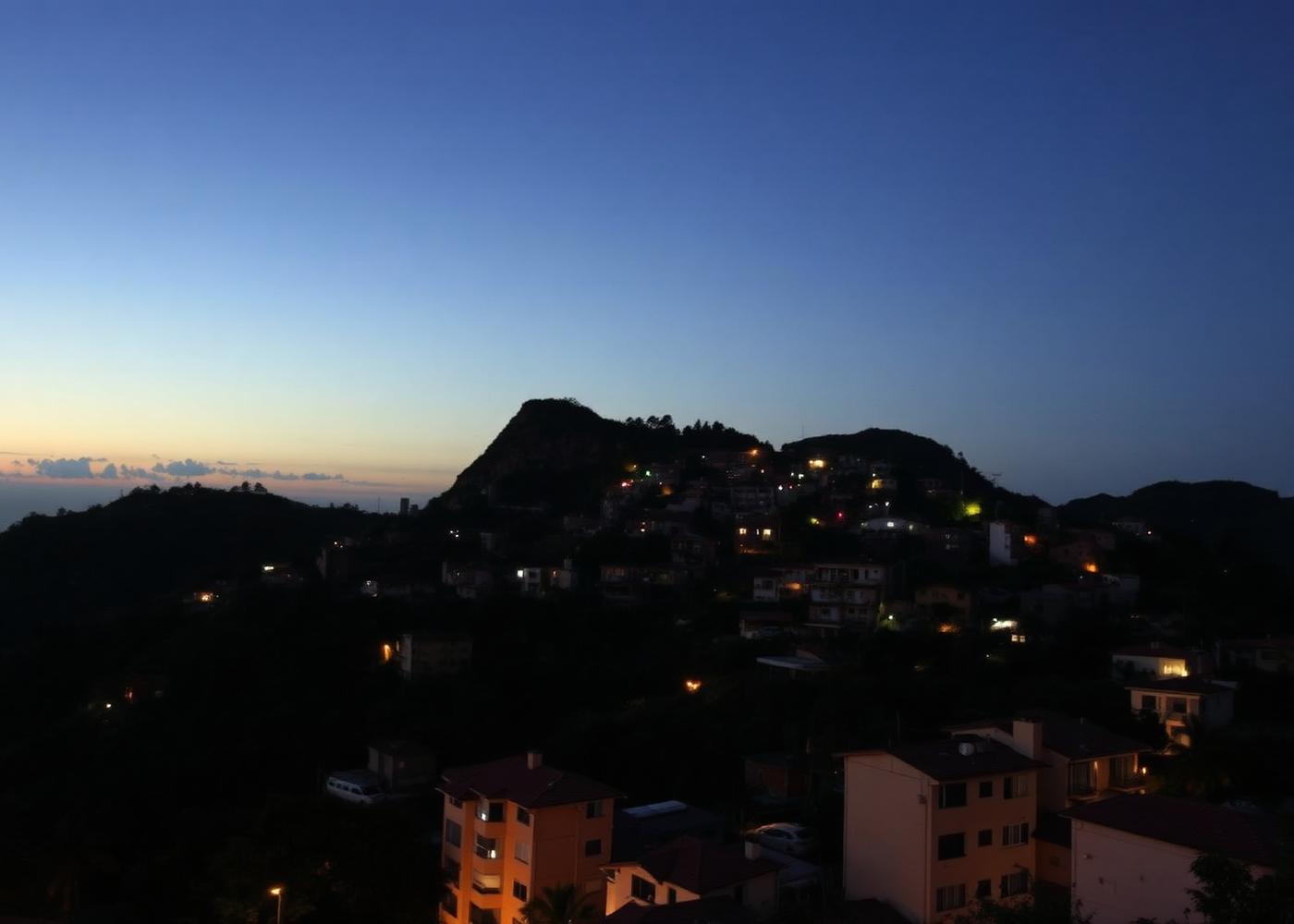
How Samba Was Born in the Morros
The story of a music born from African traditions, Black communities, resistance and the everyday life of Rio de Janeiro.
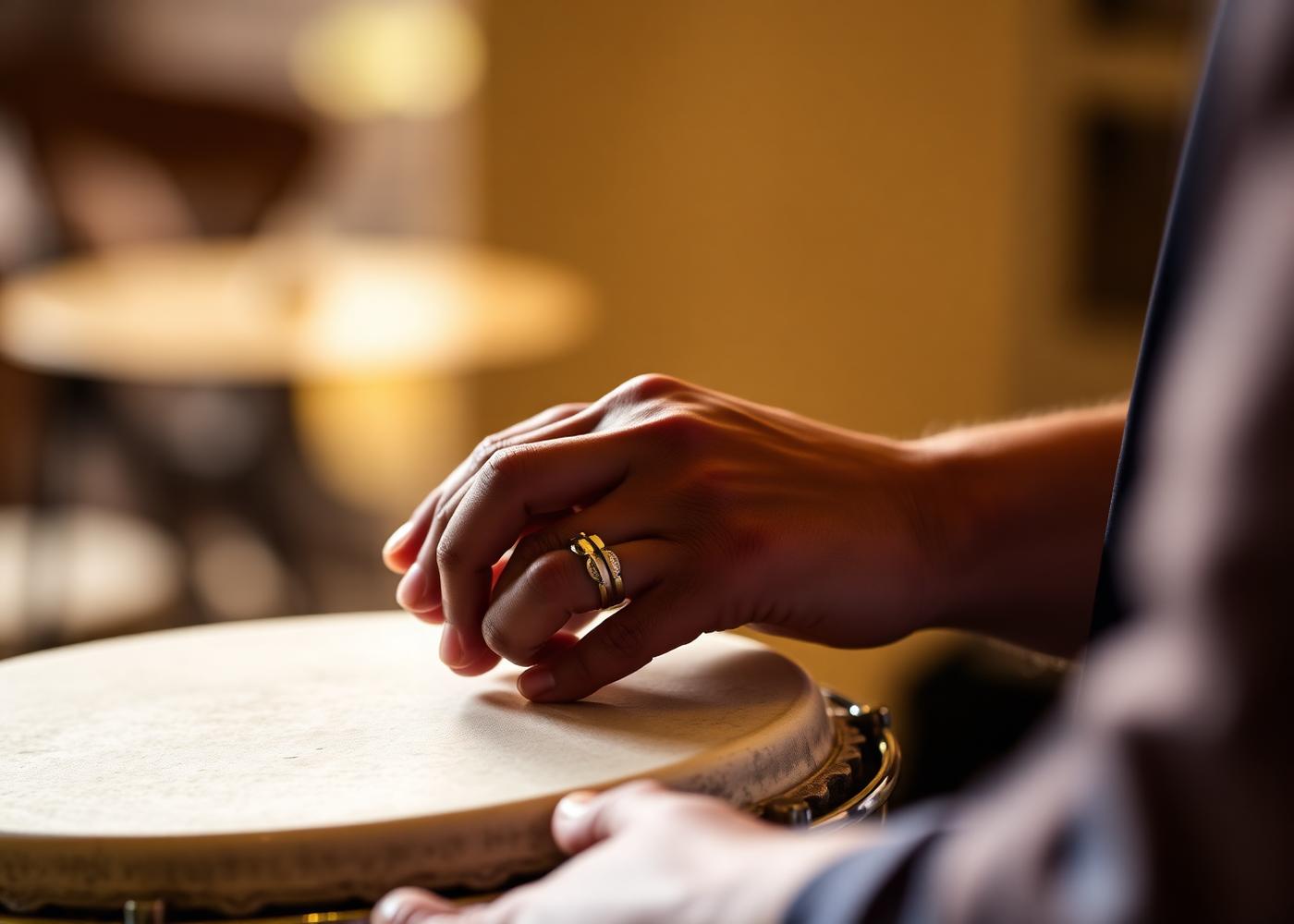
An evening in Rio de Janeiro. From a backyard in the city center, from a bar in Lapa, or from a community hall on the slope of a morro, the first notes emerge: the dry tap of a tamborim, a pandeiro setting the pulse, and the soft sound of a cavaquinho. People pull their chairs closer, clap along to the rhythm, sing a line that no one announced beforehand — and suddenly this music is there, feeling as though it comes from the city itself.
Anyone who experiences such a roda almost inevitably asks the question: how did local Afro-Brazilian traditions become a music that is today associated with Brazil worldwide? And why are Rio de Janeiro's morros so closely tied to this story?
The short answer: samba was not born on a single day, nor in a single place. Its story developed over decades across a network of houses, streets, morros, courtyards, religious communities and neighborhoods — carried by Afro-Brazilian people who came to Rio from Bahia and other regions, built new neighborhoods there, and continued to develop their musical and spiritual traditions.
„Samba is not an invention. It is a story that many people, in many places, wrote together."
What Does "Morro" Mean in Rio de Janeiro?
Literally translated, "morro" simply means "hill". In Rio de Janeiro, however, the term carries a much denser meaning. The city lies between mountains, granite outcrops and the sea; its topography is rugged, and many residential areas literally cling to the hillsides. As Rio urbanized rapidly from the late 19th century onward, these hills became favored places for people who found neither space nor affordable rents in the city center.
"Morro" thus became a social term. It came to stand for the communities in which mainly Black families, migrants from the countryside, and low-income population groups settled. Many of these settlements developed over decades into the later favelas — not as a sudden phenomenon, but with their own construction methods, their own economy and their own culture.
"Morro" and "favela" are often used synonymously today, but they are not the same. "Morro" refers to the geographic location on a hillside; "favela" stands for a specific, historically developed form of housing and social organization that also exists on flat terrain. In the history of samba, we encounter both terms — and both tell stories of exclusion as much as of self-affirmation.
Samba Was Not Born in a Single Place
Anyone looking for a single street, a single house or a single name as the "birthplace" of samba is looking too narrowly. Urban samba developed gradually — from older Afro-Brazilian music and dance forms such as Samba de Roda from Bahia, from Lundu, Maxixe, Choro and Marcha, from religious rhythms, and from communal music-making in courtyards and backyard houses.
Various spaces converged in this development: Rio's port district, the area around Praça Onze, the houses of Afro-Brazilian women from Bahia, but also suburbs and carnival groups. Later, impulses increasingly migrated to the morros and formed new expressions there. The samba we hear today is the result of this movement — not the brainwave of a single person, and not the invention of a single place.
The African and Afro-Brazilian Roots
Between the 16th and 19th centuries, an estimated several million people were forcibly taken from West and Central Africa to Brazil — more than to any other country in the Americas. Despite the violence of slavery, these people preserved and transformed music, dance, religion, culinary traditions and language. Out of a multitude of regional and ethnic traditions, new Afro-Brazilian practices emerged over generations.
Several elements are central to the later development of samba: making music in a circle, the call-and-response structure between lead singer and community, the polyrhythmic approach to percussion, the connection between music and the body, improvisation as a collective practice, and the embedding of music in social and spiritual spaces. None of this is "African culture" in the singular — these are further developments from many different sources.
Particularly important was the region of Bahia with its Samba de Roda, a musical and dance form widespread in the Northeast that was recognized by UNESCO in 2005 as intangible cultural heritage of humanity. Samba de Roda is not identical to the later urban samba of Rio — but without its rhythms, its circle formation and its culture of communal music-making, the emergence of Carioca samba is unthinkable.
Bahia, Rio and the Migration of Black Communities
In 1888, slavery was abolished in Brazil with the "Lei Áurea" — the last country in the Americas to do so. But formal freedom was not accompanied by social integration. Millions of formerly enslaved people and their descendants found themselves without land, without capital and without institutional support. Racism shaped the labor market, housing conditions, education and culture.
In the following decades, many people from Bahia moved to Rio de Janeiro, then the capital of Brazil. They brought with them music, religion, cuisine, language and family networks. In the ports, at the markets, in small workshops and in private backyards, new Black neighborhoods took shape.
Women played a decisive role in this migration. As cooks, vendors, laundresses, ceremony leaders and hosts, they formed the social backbone of many communities. Their houses became gathering points for musicians, newcomers and religious communities — and thus one of the most important foundations that allowed urban samba to develop at all.
Pequena África and Praça Onze
The cultural historian Heitor dos Prazeres, himself a musician and son of this neighborhood, coined the term "Pequena África" — Little Africa — for Rio's port district. It refers to the neighborhoods of Saúde, Gamboa, Cidade Nova and the area around Praça Onze de Junho, which developed into a dense Afro-Brazilian neighborhood in the late 19th and early 20th centuries.
Many of the families who had moved from Bahia lived here. Terreiros of Candomblé stood here, people met here to form carnival groups, and here people traded, celebrated, believed and made music. Praça Onze was the central public square — a stage for carnival blocos, a meeting place for political speeches, and an emotional point of reference for generations.
Another point of convergence was Pedra do Sal, a rock at the edge of the port district. It was a place of work, a place of residence, and, in the early decades of the 20th century, an important place for musicians. To this day, Pedra do Sal is considered one of the symbolic cradles of samba — without samba being reducible to it alone.
Planned: Praça Onze, Pedra do Sal, terreiros, houses of the Tias Baianas and today's memorial sites.
The redevelopment of the city center under Mayor Pereira Passos, starting in 1902 — the so-called "Bota-abaixo", the "tearing down" — permanently changed the Pequena África. Entire streets were destroyed, and many residents were forced to leave. But the cultural networks remained — they shifted, into the suburbs, into other districts, and, from the 1920s onward, increasingly into the morros.
The Tias Baianas
Among the central figures of the Pequena África were women who went down in history as "Tias Baianas" — "aunts from Bahia". They were migrants, often with close ties to Candomblé, frequently also cooks, traders and ceremony leaders. Their houses were more than living space: they were religious, cultural and social centers.
In these houses, musicians, carnival groups, neighbors and fellow believers met. People cooked, prayed, sang and made music — and in this concentration, musical forms that would later be called samba continued to develop. The Tias Baianas were not "nice hostesses" in a decorative sense: they were networkers, authorities and custodians of a culture that was often despised in official Rio.
To this day, the role of the "Baianas" in samba school parades recalls these women. The Ala das Baianas is one of the oldest and most respected sections of every escola — a visible sign of the connection between the houses of the Pequena África and today's carnival.
Tia Ciata and Her House
Among the Tias Baianas, Hilária Batista de Almeida (1854–1924), known as Tia Ciata, stands out in particular. Born in Bahia, she moved to Rio in the 1870s, where she became an influential figure in the region around Praça Onze. As an Iyalorixá of Candomblé, she was a religious authority; as a hostess, she opened her house to music, celebrations and political conversations.
At her house at Rua Visconde de Itaúna 117, musicians such as Donga, Pixinguinha, João da Baiana, Sinhô, Heitor dos Prazeres, Caninha and many others met. A space emerged in which classical musicians, choro instrumentalists, Afro-Brazilian singers and young sambistas made music together. Out of this context, many of the early sambas emerged — collectively, in improvised sessions, often without clear authorship.
Tia Ciata is often called the "mother of samba". The phrase is understandable, but simplifying: she was not the inventor of a music, but one of those who gave samba a place, a network and social support. This role was no less important than that of the musicians themselves — it was one of the foundations without which what we now call samba would hardly exist.
"Pelo Telefone" and the First Recorded Samba
In 1916, a title was registered at the Biblioteca Nacional under the name of Donga (Ernesto dos Santos): "Pelo Telefone". In 1917, the song was released on record and became a carnival hit. It went down in music history as the first commercially recorded title described as "samba".
Yet authorship was, and remains, disputed. Many elements of the song had previously emerged in sessions at Tia Ciata's house and in other houses of the Pequena África — collectively, improvised, without sheet music. The registration under a single name reflected the exploitation rules of the emerging music industry, not the social reality in which the music had grown.
"Pelo Telefone" is therefore not evidence that samba was "invented" in 1916. It is an important date in its institutionalization: the first time this kind of music was officially registered, recorded and disseminated under this name in an emerging mass medium. Between the living music of the courtyards and the institution of "recorded samba" lies a gap that should not be argued away.
From the Center to the Morros
The redevelopment of the city center, rising rents, social exclusion and the need for housing in a growing city led more and more Black and low-income families to settle on the hillsides of the city. This process was neither linear nor uniform — but over the course of the 1910s and 1920s it increasingly shifted important cultural networks into the morros.
An important distinction: not all Black residents of the Pequena África moved to favelas. Many remained in suburbs such as Oswaldo Cruz, Madureira, Ramos or Cascadura, which became cultural centers in their own right. Others moved to morros such as Estácio, Mangueira, São Carlos, Salgueiro or Vila Isabel. Samba migrated with the people — and changed along with their new living conditions.
In the morros, new forms of musical organization developed. Instead of private salons, neighborhoods emerged in which music took place outdoors, on stairways, in alleys, in courtyards and in clubhouses. This relocation is one of the prerequisites for the emergence of the samba schools.
Morro da Mangueira
The Morro da Mangueira in the Zona Norte is one of the central places in samba history. It was here, in 1928, that the Estação Primeira de Mangueira was founded, one of the first and still one of the most influential samba schools in Brazil. Its colors, green and pink, have long since become a hallmark of Rio's carnival.
Mangueira is inseparably linked to composers such as Cartola (Angenor de Oliveira, 1908–1980), Carlos Cachaça (1902–1999), Nelson Cavaquinho (1911–1986) and Dona Zica (Euzébia Silva do Nascimento, 1913–2003). Their songs shaped not only the samba school's repertoire but the entire genre: melodies, lyrics and harmonies that belong to Brazil's cultural memory, far beyond carnival.
The samba school is more than a carnival group. It is a neighborhood institution with music rehearsals, workshops, social projects and its own cultural center. The Museu do Samba at the foot of the morro documents this history — for travelers, one of the most rewarding stops for understanding samba historically.
You can find more on the geographic and social context of Rio's communities in our community profiles — for example on Rocinha, Vidigal and Santa Marta.
Morro do Salgueiro
The Acadêmicos do Salgueiro emerged in 1953 from the merger of older carnival groups and, from the 1960s onward, became one of the most defining samba schools in Rio. Salgueiro produced Sambas de Enredo that placed Black history and Afro-Brazilian themes at the center — at a time when this was by no means a given in Brazilian cultural life.
Carnival designers such as Fernando Pamplona, and later writers, musicians and directors, developed at Salgueiro a new way of narrating parades: visually striking, historically grounded and with a clear political self-understanding. Salgueiro showed that samba schools are not folkloric backdrops but cultural actors with their own signature.
Other morros and neighborhoods also played decisive roles for samba — Portela in Oswaldo Cruz, Império Serrano in Madureira, Vila Isabel, Beija-Flor de Nilópolis. The history of the samba schools is a web, not a straight line.
Morro de São Carlos and Estácio
The Estácio de Sá neighborhood lies between the center and the Zona Norte, bordering morros such as São Carlos. In the 1920s, an environment formed here in which samba changed decisively in musical terms: it became faster, more clearly structured rhythmically, and suited to parades — in contrast to the earlier, more "amaxixado" style from the Pequena África.
With musicians such as Ismael Silva (1905–1978), Bide (Alcebíades Barcelos), Marçal (Armando Marçal), Brancura and Baiaco, the group "Deixa Falar" formed in Estácio — founded in 1928 and considered by many to be the first Escola de Samba. From this environment came the musical foundation for the later Samba de Enredo.
Samba de Estácio was not just a new style but a new idea: music as an organizational form of a neighborhood. In Estácio, the everyday culture of the district combined with a deliberate public presence — on the street, at carnival, in competition with other groups.
How Samba Changed Musically
The early sambas recorded in the environment of the Pequena África were still close to Maxixe and Choro. They were melodically playful, rhythmically more swinging, often arranged with piano and horns. Samba de Estácio, by contrast, placed the emphasis on a tight, danceable pulse, clear refrains and a structure suited to long parades.
The interplay of a percussion ensemble became central: the surdo carrying the fundamental pulse, the tamborim for sharp accents, the cuíca with its speech-like sound, pandeiro, reco-reco, agogô, repinique. Cavaquinho and guitar provided the harmonies, the voice the narrative. This combination produced the typical sound that remains associated with samba schools to this day.
In parallel, further forms developed: the lyrical Samba-Canção, the later Bossa Nova, Partido Alto with its strong tradition of improvisation, and later Pagode, Samba-Reggae from Bahia, and many more. Samba is an entire family of styles, not a single musical form.
Instruments of Samba
Large bass drum that carries the fundamental pulse of samba.
Small, high-pitched hand drum for sharp rhythmic accents.
Friction drum with a distinctive, speech-like sound.
Frame drum with jingles — the solo instrument of the Roda de Samba.
Small four-stringed plucked instrument — the harmonic backbone of samba.
Leads the bateria of a samba school, calling in entries and breaks.
Double bell whose two pitches create characteristic patterns.
Scraped idiophone that thickens the rhythmic texture.
Rattle with many metal plates for the dense carnival sound.
Planned: short audio examples for each instrument, recorded in Rio's cultural centers.
Samba as a Criminalized Culture
In the first decades of the 20th century, Afro-Brazilian culture was stigmatized in large parts of Brazilian public life. The press and politics frequently associated Black music with "disorder" and "vagrancy"; the police repeatedly raided houses in the Pequena África, disrupting celebrations, rodas and religious ceremonies.
There was no blanket "samba ban" in the form of a single law. But the everyday life of Afro-Brazilian musicians was marked by controls, arbitrariness and discrimination. Instruments were confiscated, people were arrested, and religious practices were criminalized. Only over the course of the 20th century did this practice begin to shift — not always in a straight line and not without setbacks.
This had paradoxical consequences for the music itself. Repression, in many cases, strengthened the internal organization of the communities. Neighborhood networks, religious houses and, later, the samba schools provided protected spaces in which music could be developed and passed on — often with a very deliberate approach to their own visibility.
Candomblé, Umbanda and Spiritual Spaces
Without the religious spaces of the Afro-Brazilian communities, the history of samba would be incomplete. Candomblé preserved West African traditions for centuries; Umbanda emerged in the 20th century as an independent Brazilian religion that combined various influences. In both, drums, song and dance played central roles.
Many sambistas grew up in this religious context. They knew rhythms and vocal forms from the terreiros and transferred ideas from them into secular contexts. Conversely, many compositions later drew again on religious imagery. These connections, however, are not a simple equivalence: religious music has a different purpose, a different place and a different meaning than public samba.
Afro-Brazilian religions were discriminated against and at times persecuted for much of the 20th century. That they are more visible again today is the result of long work by the communities themselves — and a reason why respectful engagement with religious spaces belongs to the basic equipment of any serious interest in samba.
The Emergence of Samba Schools
An Escola de Samba is not a school in the ordinary sense. It is a cultural organization of a neighborhood in which music, dance, craft, carnival preparation, social projects and club life come together. There are composers, singers, percussionists, passistas, baianas, costume designers, workshops, administration — and a community that identifies with all of it.
The samba schools emerged from a transformation of older carnival forms. Cordões, ranchos and blocos had already been active on the streets in the 19th and early 20th centuries. With Samba de Estácio and the self-understanding of being an "Escola" — that is, a serious, lasting institution — a new form emerged in the late 1920s.
There are various explanations for the term "Escola". One common legend points to a schoolhouse near a rehearsal spot in Estácio; what is historically documented, above all, is that the sambistas wanted to shape a different image of themselves with the name — one that made visible their claim to cultural seriousness.
Deixa Falar and the First Samba Schools
"Deixa Falar" — "Let Them Talk" — was founded in Estácio in 1928. It is regarded by many historians as the first group to call itself an Escola de Samba. Shortly afterward, other schools formed: Mangueira in 1928, Portela in 1935 (emerging from older blocos), Império Serrano in 1947, Salgueiro in 1953 — and many others.
There is no sharp dividing line between the older carnival forms and the samba schools. Cordões, ranchos and blocos continued to exist, often interwoven with one another. The samba school is more of a concentration — an organizational form that more systematically linked the new samba, the neighborhood and carnival.
Samba, the State and National Identity
In the 1930s, the perspective of Brazilian politics on samba changed. Under the government of Getúlio Vargas, Afro-Brazilian culture was increasingly staged as part of a national identity. Radio, records, cultural policy and, later, cinema helped make samba a symbol of Brazil.
This recognition was ambivalent. It brought a music that had previously been criminalized new media reach and economic opportunities. At the same time, the musicians who had shaped samba often remained socially marginalized. Appropriation by the state and the music industry frequently went hand in hand with a standardization that put local forms under pressure.
Recognition and control existed simultaneously. This double movement explains much about the way samba is engaged with today — from the proud self-presentation of the samba schools to recurring debates about commercialization and representation.
Radio Transforms Samba
From the late 1920s onward, radio became the most important distribution channel for popular music in Brazil. Performers such as Carmen Miranda, Francisco Alves and Mário Reis turned samba into a music that played in living rooms throughout Brazil — often in versions adapted for a middle-class audience.
For many composers from the morros, radio meant opportunities that had previously been impossible. They sold songs, shaped interpretations and became part of an emerging music industry. At the same time, a gap emerged: whoever wrote a melody was not always the one who sang it — and whoever sang it did not always earn fairly from something composed within a neighborhood.
The debate over fair exploitation structures runs through the history of samba to the present day. Cultural recognition and economic participation rarely coincide on their own.
Women in the History of Samba
The history of samba is often told as a succession of male names. This narrative falls short. Women shaped samba at many decisive points — as Tias Baianas, as singers, composers, passistas, baianas, as managers and as bearers of the cultural knowledge of their communities.
Names such as Clementina de Jesus (1901–1987), Dona Ivone Lara (1922–2018), Jovelina Pérola Negra (1944–1998), Leci Brandão (b. 1944), Alcione (b. 1947) and Beth Carvalho (1946–2019) represent different generations and styles. Dona Ivone Lara was one of the first women to be officially recognized as a composer for a major samba school (Império Serrano) — a milestone that shows how long formal recognition took.
Looking at the women of samba is not merely a belated correction. It changes the understanding of the music itself: from a genealogy of stars to a cultural history of networks.
Important Sambistas from the Morros
Central figure of the Afro-Brazilian networks in Rio. At her house in the Praça Onze area, music, religion and community came together.
Musician from Tia Ciata's circle, co-author of "Pelo Telefone" (1916), one of the first registered sambas.
Shaped Samba de Estácio and co-founded the group "Deixa Falar" — frequently cited as the first samba school.
Composer, singer and co-founder of the Estação Primeira de Mangueira — one of the most important voices of classic samba.
Composer with an unmistakable melancholy and distinctive guitar style, shaped by Mangueira.
One of the first women recognized as a composer for a major samba school — a trailblazer for women in samba.
This selection is incomplete. It is meant to open pathways into the history, not to claim a canon. Other central names — including Monarco, Paulinho da Viola, Candeia, Zé Keti, Pixinguinha, Sinhô, João da Baiana, Heitor dos Prazeres — will be explored in upcoming portraits.
The Morros as Cultural Networks
The morros are sometimes described as if they were self-contained worlds. For the cultural history of Rio, the opposite is true. People from the morros worked in the city's hotels, restaurants, workshops, shipyards and administrations. Musicians went into the center, into the suburbs, into studios and radio stations. Neighborhoods were connected through families, clubs and religious houses far beyond the boundaries of their own morro.
This constant movement is one reason why samba was able to develop so quickly and in so many variants. Melodies traveled from one roda to the next, rhythms were tried out, altered, passed on. Samba did not emerge through isolation, but through exchange — inward and outward alike.
„Anyone who looks for samba only in the morros misses half the story. Anyone who looks for it only in the center misses the other half."
Samba as Resistance and Self-Affirmation
Samba is not inherently political. It can be cheerful, romantic, mournful, mocking, sensual, philosophical. And it can be political — sometimes explicitly, often indirectly. Many lyrics contain observations about everyday life, work, love, and the relationship between people and institutions. This everyday dimension is itself a form of self-affirmation.
Precisely because Afro-Brazilian culture was marginalized for so long, every roda, every rehearsal, every celebration was an act of cultural self-assertion. Samba schools became spaces in which Black history was told, celebrated and passed on. In the enredos of the escolas, one finds stories of Zumbi dos Palmares, of Bahia, of resistance and remembrance — long before such themes had reached the mainstream.
At the same time, samba should not be reduced to "resistance". It is also joy, craft, neighborhood, celebration. This diversity is part of its truth.
Is Samba Favela Music?
Yes and no. The close historical connection between samba, Black communities and the morros is undeniable. Without the people from Bahia, without the Pequena África, without the neighborhoods on Rio's hillsides, samba would not be what it is.
At the same time, samba never was, and is not, "only favela music". It was developed in port neighborhoods and the city center, further developed in the suburbs, spread by radio, and played by musicians from every walk of life. Reducing it to the favela does not do justice to its history — and risks losing sight of the involvement of other places and people.
From the Morro to the Sambódromo
Over the course of the 20th century, local celebrations and street parades turned into organized competitions, competitions turned into a central carnival parade, and the parade turned into a major event. In 1984, the Sambódromo Marquês de Sapucaí opened — designed by Oscar Niemeyer — as a permanent stage for the samba schools' parades.
The Sambódromo is a symbol of recognition, but also a site of tension. It brought professionalization, media, tourism and economic opportunities. At the same time, the question repeatedly arises of how much of what is presented there still has to do with community practice in the quadras — and how much is show for a global audience.
Both are true, and both should be accepted. The Sambódromo is now part of samba. It is not its center.
Samba Today in the Communities
Anyone wanting to experience samba today does not need to wait for carnival. Rehearsals take place year-round in the samba schools' quadras. In bars in Lapa, in suburban bars like Bip Bip in Copacabana, in small rodas in Botafogo, Tijuca and Madureira, music plays that directly continues the traditions of the last hundred years.
Many communities have cultural projects that introduce children and teenagers to instruments, composition and dance. Social institutions such as escolas de música, neighborhood associations and cultural centers help pass on the knowledge of rhythms, songs and techniques. Without this often-unpaid work, the next generation of sambistas would not exist.
Where Travelers Can Experience the History of Samba
Historical gathering place of Black communities, today a regular venue for Rodas de Samba.
Museum on the history of samba and the samba schools — check current opening times.
Workshop area of the major samba schools, where floats and costumes are made.
Public rehearsals especially in the pre-carnival period; contact the respective escola directly.
Bars and street rodas with different repertoires — weekdays and line-ups vary.
Places rich in tradition, off the tourist routes — check locally before your visit.
Combine cultural visits with community visits responsibly. For safety questions, we recommend our guide on safety in Rio's favelas in 2026.
Respectful Samba Tourism
Samba has become popular, exportable and mass-compatible — and precisely for this reason, the question of how to approach it as a visitor remains important. A few guidelines that have proven useful in our editorial work:
- See samba as music and culture — not merely as a show for tourists.
- Acknowledge the history of Black communities and do not photograph people without asking.
- Support local musicians, projects and cultural venues directly.
- Pay a fair price for admission, drinks and artist fees; "playing along for free" is rarely harmless.
- Respect religious spaces and ritual contexts — even when they seem musically appealing.
- Do not treat samba schools as folkloric backdrops, but as community institutions.
- Where possible, choose local guides and tours whose proceeds stay in the neighborhood.
Common Myths About the Origin of Samba
Samba was invented in a single place.
It developed over decades across a network of houses, streets, morros and neighborhoods.
"Pelo Telefone" was the very first samba.
It was the first commercial title registered as "samba" (1916). Samba already existed in many forms.
Samba originated exclusively in the favelas.
The morros were central — but the city center, the port district and the suburbs shaped samba at least as much.
Samba schools are dance schools.
They are complex cultural, social and musical organizations of their neighborhoods.
Samba was Brazil's national music from the start.
It was long marginalized and at times pursued by police before being marketed as a national symbol from the 1930s onward.
Timeline of Samba History
- before 1888
African and Afro-Brazilian musical, dance and religious forms shape the cultural everyday life of Brazil's enslaved and free Black population.
- 1888
Abolition of slavery ("Lei Áurea"). In the following years, many Black people migrate from Bahia and other regions to Rio de Janeiro.
- late 19th / early 20th century
Formation of the "Pequena África" in Rio's port district — Praça Onze, Saúde, Gamboa, Cidade Nova.
- c. 1900–1920
The houses of the Tias Baianas — among them Tia Ciata — become centers of Afro-Brazilian music, religion and community.
- 1916/1917
"Pelo Telefone" is registered and released under Donga's name — the first commercial title declared a "samba".
- 1920s
New rhythmic forms emerge in Estácio de Sá. Sambistas such as Ismael Silva, Bide and Marçal shape Samba de Estácio.
- 1928
"Deixa Falar" (Estácio) and the Estação Primeira de Mangueira are founded — the beginning of the modern samba schools.
- 1930s
Radio and records spread samba nationwide. Under the Vargas government it is increasingly staged as a national symbol.
- 1953
Founding of the Acadêmicos do Salgueiro — later shapes the narrative, Afro-Brazilian self-understanding of Samba de Enredo.
- 1984
Opening of the Sambódromo Marquês de Sapucaí — the carnival parades gain a permanent stage.
- 2005
Samba de Roda from Bahia is recognized by UNESCO as intangible cultural heritage.
- today
Rodas, quadras, cultural centers and social projects in Rio's communities keep samba alive as a living everyday culture.
Samba Glossary
- Ala
- A section of a samba school in the parade, usually costumed by theme.
- Bateria
- The percussion ensemble of a samba school, often several hundred musicians.
- Bloco
- A carnival group that parades through the streets, often with its own repertoire.
- Cavaquinho
- Four-stringed plucked instrument, the harmonic basis of classic samba.
- Comissão de Frente
- The opening group of a samba school's parade, choreographed and narrative.
- Cuíca
- Friction drum with a characteristic, speech-like sound.
- Enredo
- The theme and narrative that a samba school presents during carnival.
- Escola de Samba
- A neighborhood-organized cultural institution that presents an enredo.
- Mestre-sala
- The male dance partner who presents the flag together with the porta-bandeira.
- Morro
- Literally "hill" — historically linked to communities on Rio's hillsides.
- Pandeiro
- Frame drum with jingles, a central hand instrument in samba.
- Passista
- A dancer who performs the fast samba steps as a soloist.
- Porta-bandeira
- The bearer of a samba school's flag, central to its dance and ceremony.
- Quadra
- The clubhouse and rehearsal space of a samba school.
- Roda de Samba
- A circular musical gathering in which sambistas play and sing together.
- Samba de Enredo
- Samba composed for the carnival parade with thematic lyrics.
- Samba de Roda
- An older samba form originating in Bahia — recognized by UNESCO as cultural heritage.
- Sambista
- A musician who cultivates samba as an art form and way of life.
- Surdo
- Large bass drum that sets the pulse of the bateria.
- Tamborim
- Small hand drum for sharp rhythmic patterns.
- Tias Baianas
- Afro-Brazilian women from Bahia whose houses in Rio were centers of Afro-Brazilian culture.
Frequently Asked Questions
Where was samba born?
Samba was not born in a single place. It developed over decades across a network of Black communities in Rio de Janeiro — in the port district and around Praça Onze ("Pequena África"), in the houses of Afro-Brazilian women from Bahia, in the suburbs, and, increasingly from the 1920s onward, in the morros such as Estácio, Mangueira and São Carlos.
Was samba invented in a favela?
No. Its urban roots lie in the city center and Rio's port district. The morros decisively developed, organized and carried samba into the great samba schools — but its actual "invention" was a longer collective process, not a single act.
What role did Rio's morros play?
After the redevelopment of the city center in the early 20th century, many Black and low-income families moved to the hillsides of the city. Neighborhoods formed in morros such as Estácio, Mangueira, São Carlos, Salgueiro and later Vila Isabel, where sambistas rehearsed, composed and founded the first samba schools.
What is Pequena África?
"Pequena África" (Little Africa) is the historical name for Rio's port district around Praça Onze, Saúde and Gamboa. After the abolition of slavery in 1888, a dense Afro-Brazilian neighborhood formed there, with markets, religious houses, music and the houses of the so-called Tias Baianas.
Who was Tia Ciata?
Hilária Batista de Almeida (1854–1924), known as Tia Ciata, was an Afro-Brazilian woman from Bahia who became one of the most influential figures in Rio's Pequena África. Musicians, religious communities and neighbors met at her house — a space in which urban samba decisively developed further. However, she was not the sole "inventor" of samba.
Why is "Pelo Telefone" famous?
"Pelo Telefone" was registered in 1916 under the name of Donga (Ernesto dos Santos) and is considered the first commercially recorded title declared a "samba". It marks an important moment of institutionalization, not the beginning of the music itself — samba already existed in various forms.
Who was Donga?
Donga (Ernesto Joaquim Maria dos Santos, 1890–1974) was a musician from Tia Ciata's circle and one of the co-authors of "Pelo Telefone". A dispute over authorship persists to this day, because many melodies and motifs were collectively developed in the houses of the Pequena África.
What is Samba de Estácio?
Samba de Estácio is the variant shaped from the late 1920s onward in the Estácio de Sá neighborhood. It is rhythmically tighter, faster, and considerably more suited to parades — the musical foundation for the later Samba de Enredo performed by samba schools.
What was Deixa Falar?
"Deixa Falar" was founded in Estácio in 1928 and is regarded by many historians as the first group to call itself an "Escola de Samba". It was the prototype of a new organizational form from which the samba schools emerged.
How did samba schools come about?
Samba schools emerged from older carnival forms such as ranchos, cordões and blocos, combined with the new rhythmic samba from Estácio and the organized community life of the morros. They are complex cultural and social organizations, not music schools in the narrow sense.
Why are they called samba schools?
The term "Escola de Samba" has several interpretations. One common story points to a schoolhouse in Estácio near where the early sambistas rehearsed — what is certain, above all, is that the term underlined a self-understanding as serious cultural institutions, not merely carnival groups.
Which was the first samba school?
"Deixa Falar" from Estácio (1928) is often cited as the first Escola de Samba. Mangueira (1928) and other schools formed almost simultaneously. The question of "the one first" samba school remains historically disputed.
What role did Mangueira play?
The Estação Primeira de Mangueira was founded in 1928 on the Morro da Mangueira. It shaped samba through composers such as Cartola and Carlos Cachaça, Nelson Cavaquinho and Dona Zica — and remains one of the culturally most influential samba schools in Brazil to this day.
What role did Estácio play?
Estácio was where samba opened up rhythmically for the carnival parade. Musicians such as Ismael Silva, Bide, Marçal, Brancura and Baiaco shaped the new style and the idea of the samba school as a neighborhood institution.
What role did Salgueiro play?
The Acadêmicos do Salgueiro, founded in 1953, transformed the aesthetics of samba schools from the 1960s onward. Salgueiro placed Black history, Afro-Brazilian themes and narrative parades at the center — an impulse still felt in Samba de Enredo today.
Why was samba persecuted in the past?
In the first decades of the 20th century, Afro-Brazilian music, dance and religious forms were regarded in parts of politics, the police and the press as "disorder". There were police controls, repression of religious houses, and discrimination against Black musicians — even if not every prohibition applied with equal severity.
What connection exists between samba and Afro-Brazilian religions?
Many sambistas were connected to Candomblé and, later, Umbanda. Religious houses were social spaces in which music, dance and community were cultivated. Religious music and samba, however, are not the same thing — they stand in a close cultural relationship, not a simple equivalence.
Which instruments belong to samba?
Key instruments include the surdo, tamborim, cuíca, pandeiro, cavaquinho, reco-reco, agogô, chocalho, repinique, as well as guitar and vocals. The line-up varies depending on the style — Roda de Samba, Samba de Enredo, Pagode.
Is samba just carnival music?
No. Carnival is the most visible stage, but samba is lived all year round in rodas, bars, cultural centers and the quadras of the samba schools. It is everyday culture, not merely spectacle.
What role did women play?
Women shaped samba from the very beginning — from the Tias Baianas as hosts and networkers, to singers and composers such as Dona Ivone Lara, to the Baianas of the samba schools. Their work was historically often made less visible than it deserved.
How did samba become Brazil's national music?
In the 1930s, under the government of Getúlio Vargas, samba was increasingly staged as a national symbol via radio, records and state cultural policy. This recognition brought reach, but also appropriation — and stood in contradiction to the discrimination against Black culture that continued to exist.
Where can you experience the history of samba in Rio?
Key locations include Pedra do Sal in the port district, the Museu do Samba in Mangueira, the Cidade do Samba, samba school rehearsals in their quadras, and Rodas de Samba in Lapa or suburban bars. Always check opening times and programs before your visit.
Can you visit samba school rehearsals?
Yes, many escolas open their quadras to the public in the months before carnival. Programs, prices and access change every year — check directly with the respective samba school or a reliable local contact.
What is the difference between samba and Samba de Enredo?
Samba is the umbrella term for a family of styles. Samba de Enredo is the specific samba composed for a samba school's carnival parade, whose lyrics ("enredo") narrate a theme — historical, biographical or social.
What significance does samba have in the favelas today?
Samba is a central element of identity, education and community in many communities. Quadras, cultural projects and rodas foster young musicians and keep alive the knowledge of compositions, rhythms and traditions.
Conclusion
Samba was not created by a single person, nor in a single place. It developed from African and Afro-Brazilian traditions, from migration, from religious and social communities, from the houses of Black women, from the center of Rio, the suburbs and the morros. It was discriminated against for decades — and is today one of Brazil's defining cultural phenomena.
The morros became decisive places where samba was lived, transformed, organized and passed on to new generations. The samba schools are the most visible, but not the only, form of this culture. Rodas, cultural centers, quadras and neighborhoods keep samba alive as an everyday practice.
„Anyone who wants to understand samba cannot only look at carnival. You must also get to know the morros, the Black communities and the history of Rio de Janeiro."
Sources, Author and Update
- Author: Maria Souza
- Published: 14. Juni 2026
- Last editorial review: 29. Juli 2026
- Fact-checked by: historians, musicologists, sambistas from Rio
- Specialist literature on Brazil's music and cultural history
- Museu do Samba, Rio de Janeiro
- Instituto Moreira Salles
- Instituto do Patrimônio Histórico e Artístico Nacional (IPHAN)
- Fundação Biblioteca Nacional
- UNESCO documentation on Samba de Roda
- Archives and collections of the samba schools
- Interviews with sambistas and community organizations
History is told from different perspectives. We editorially review notes from researchers, sambistas and members of the communities mentioned. Factual corrections are welcome at info@insidefavela.com.