Favela Vidigal — Rio's Balcony Over the Atlantic
Between Leblon and São Conrado, one of Rio's most fascinating communities clings to the steep slope of Dois Irmãos. Vidigal combines a spectacular view, a lived-in neighbourhood and a surprisingly rich culture and music scene. This guide tells you what you should genuinely know before a visit — respectfully, practically and without clichés.
- Location
- Zona Sul, Rio de Janeiro
- Population
- ~ 12,000
- Founded
- 1940s
- Local mountain
- Morro Dois Irmãos (533 m)
Where is Vidigal?
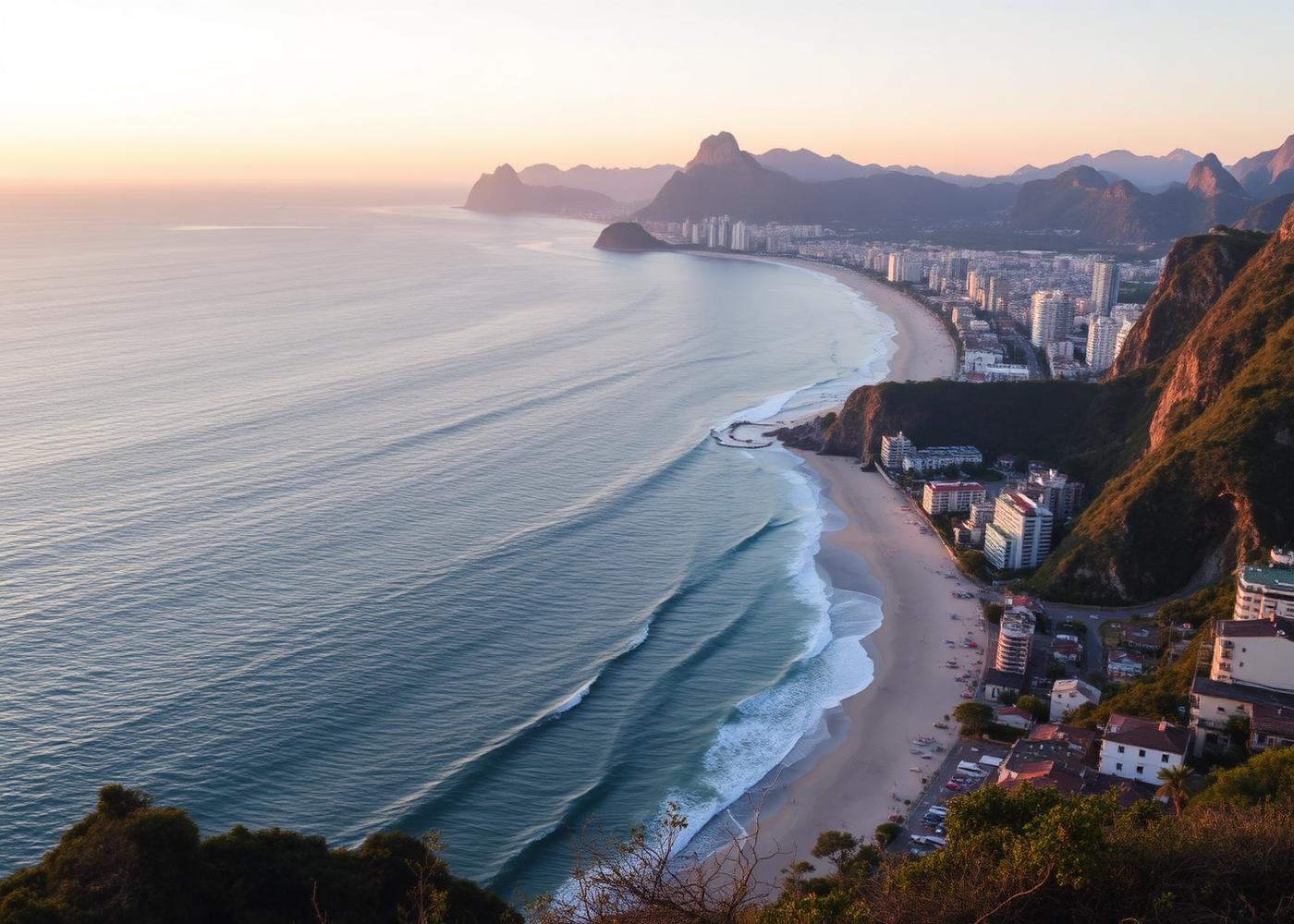
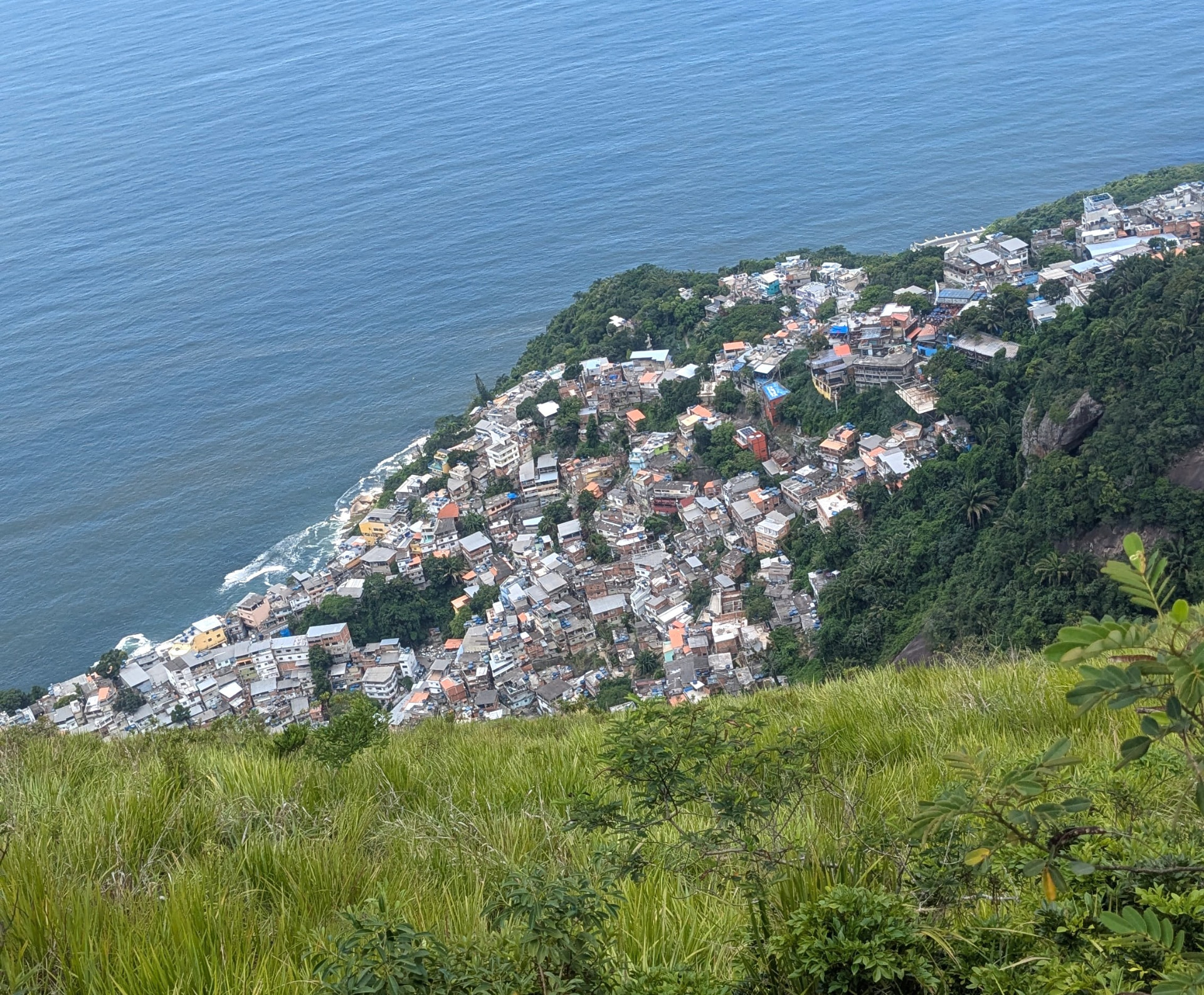
Vidigal sits at one of Rio de Janeiro's most spectacular addresses: directly on the steep northern flank of Morro Dois Irmãos, between the fashionable neighbourhoods of Leblon to the east and São Conrado to the west. Access runs via the winding Avenida Niemeyer, which hugs the Atlantic coastline and connects the Zona Sul with Barra da Tijuca.
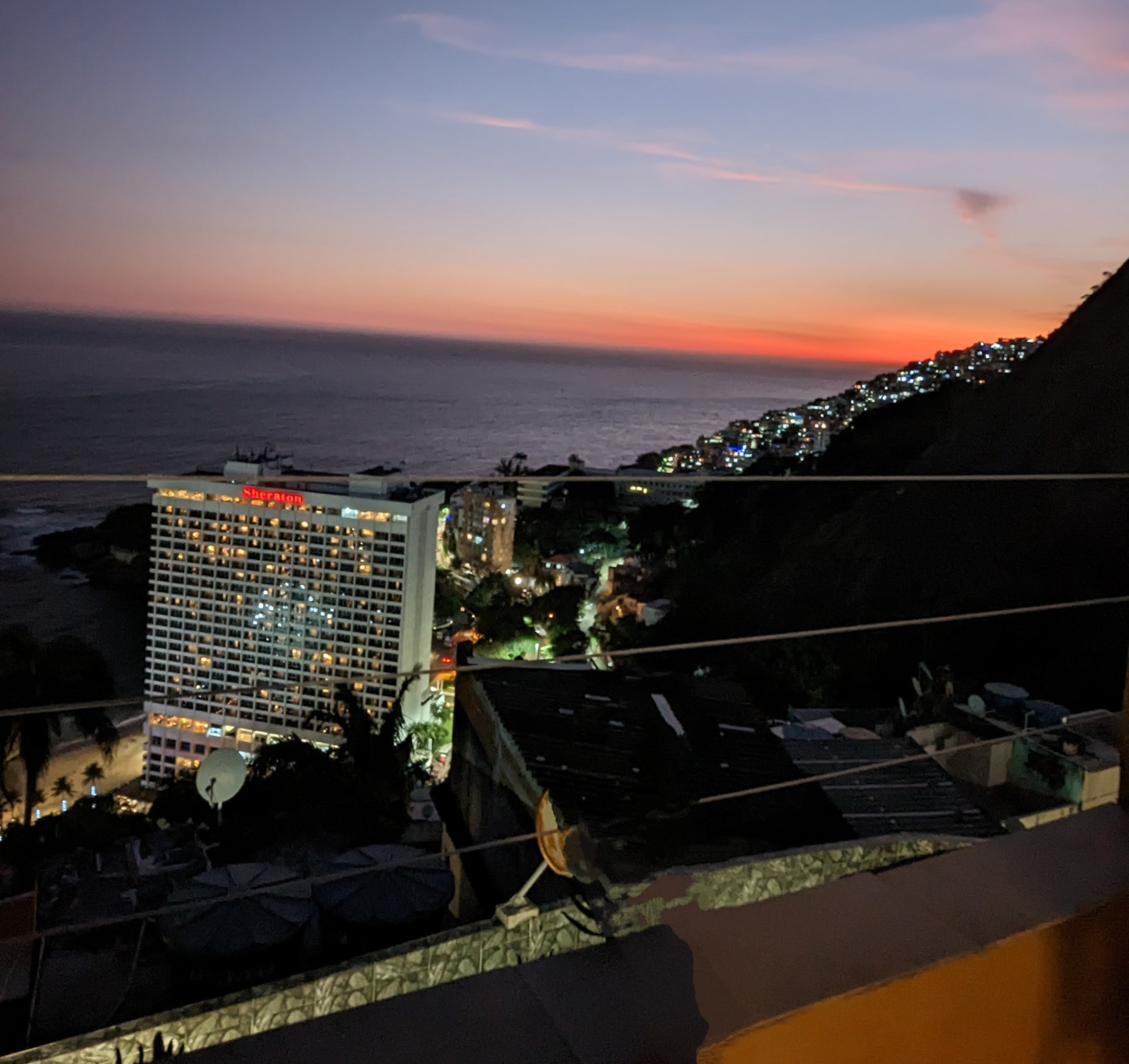
The community stretches vertically across several hundred metres of elevation — from the coastal edge almost to the two peaks that give the mountain its name. This position is the reason for the feature that has made Vidigal famous throughout Rio: one of the city's most unobstructed views. From the top you can see Ipanema, Leblon, the Lagoa Rodrigo de Freitas, the silhouettes of Corcovado and Pedra da Gávea, and, on clear nights, the lights of the Corcovado Christ statue.
Vidigal, Zona Sul · Rio de Janeiro · Brazil
Coordinates: −22.995°, −43.233°
Placeholder for an interactive map.
What makes the location special
Vidigal is one of the few favelas in Rio where sea, mountain and city meet within a single sightline. The community borders directly on the Parque Nacional da Tijuca, the largest urban rainforest in the world. Anyone who walks up the main access route toward the Mirante do Arvrão feels, within a few minutes, the shift from the traffic of the coastal road to a surprisingly quiet mountain landscape covered in tropical vegetation.
The History of Vidigal
Founded in the 1940s
Vidigal took shape from the late 1940s onward, as working-class families — many from Brazil's northeast and from the interior of Rio de Janeiro state — settled the barely built-up slope of Dois Irmãos. The name traces back to the colonial landowner Miguel Nunes Vidigal, whose estates once reached this stretch of coast. As with many of Rio's favelas, the first houses were simple wood and corrugated-metal structures that later gave way to brick and concrete buildings, climbing the mountainside floor by floor.
Resistance to forced eviction
The defining moment for Vidigal's identity came in the 1970s. Under the military government, the community was slated for eviction to clear the hillside for hotel projects and luxury developments. Residents organised, founded the Associação de Moradores (residents' association) and appealed to, among others, the Catholic Church and human-rights lawyers. In the end, Vidigal remained — one of the few communities in Rio to fend off a state-ordered relocation as a united front. That collective experience still shapes the neighbourhood's sense of self today.
Development and change
From the 1990s onward, Vidigal — like many favelas in the Zona Sul — went through a difficult period of drug trafficking and recurring conflict. The introduction of the Unidade de Polícia Pacificadora (UPP, Pacifying Police Unit) in 2012 ushered in a period of relative calm. Cafés, bars, hostels and small studios opened. Well-known figures such as the actor David Beckham purchased houses further up the slope, which brought the community international visibility — but also fresh debates about gentrification.
Significance within Rio
Today Vidigal stands as a symbol of how a favela can preserve its identity even as economic and touristic forces act upon it. The place features in many of Rio's narratives: as the starting point for Dois Irmãos, as a stage for international music collaborations, as home to a new generation of artists and creatives. Readers who want to go deeper into the history will find further context in the forthcoming piece on the History of the Favelas.
Life in Vidigal
Everyday life on the slope
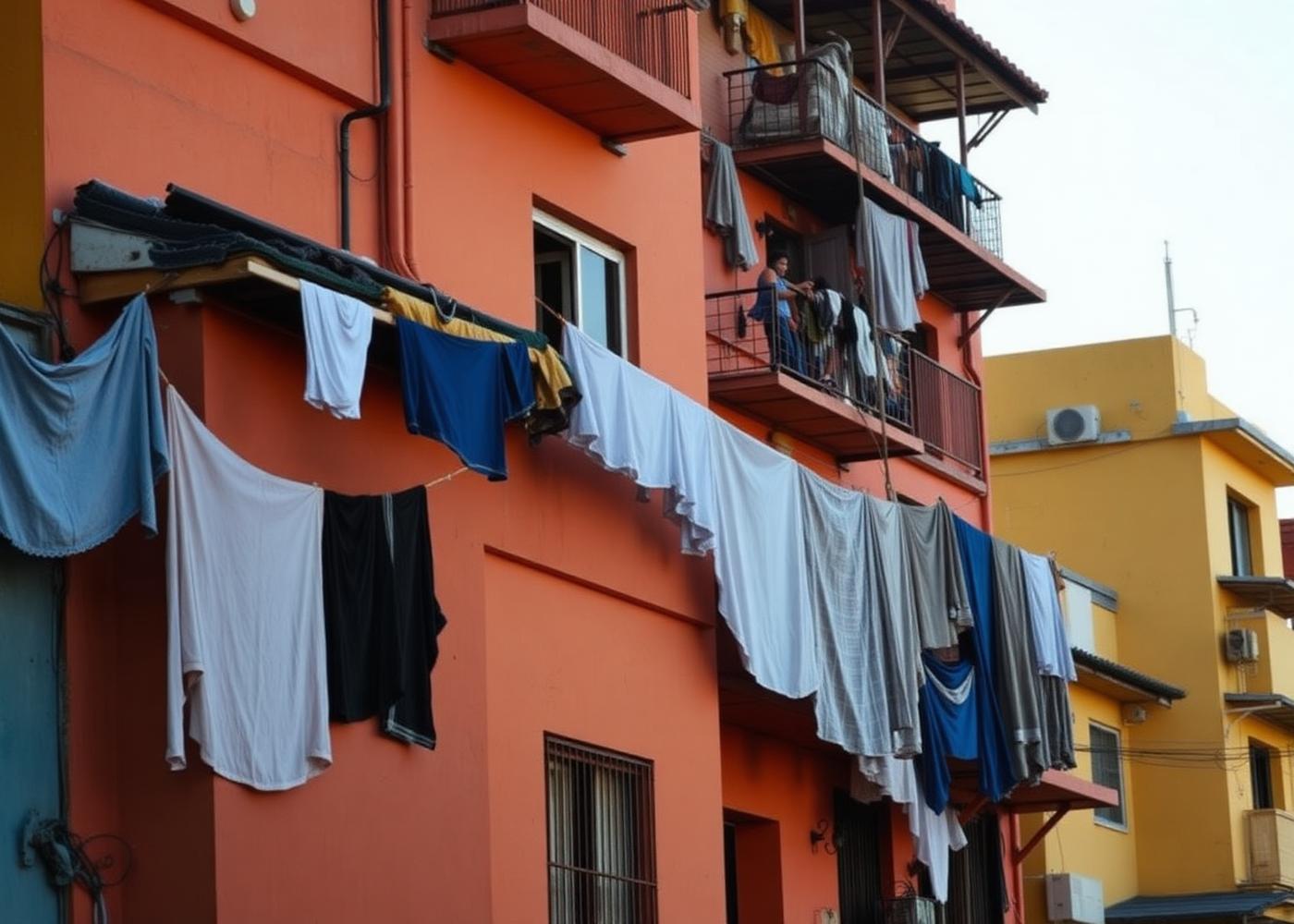
Daily life in Vidigal begins early. Before seven in the morning, the first mototáxis set off from the praça at the foot of the hill to carry residents to work on the beaches of Leblon and Ipanema or in the office towers of Centro. On the narrow alleys — known here as becos and vielas — the air smells of freshly brewed coffee, and street corners serve up pão de queijo and tapioca.
Neighbourhood and community
Anyone who spends time in Vidigal quickly notices that the neighbourhood runs on personal relationships. Children grow up in the squares between the houses, neighbours look out for one another, and many families have lived in the same beco for three or four generations. The residents' association remains a central institution to this day — representing local interests to the city administration, utility providers, and, at times, investors as well.


Culture, art and music
Vidigal has an unusually dense culture scene for its size. The legendary theatre project Nós do Morro ("We of the Hill") was founded here in 1986 and produced part of the cast of the film City of God. To this day the group works with children, teenagers and adult amateurs, and tours regularly across Brazil and Europe. Alongside it, samba de raiz, chorinho and funk carioca shape the musical landscape — as does a growing scene of batucada collectives rehearsing in the small squares.
Anyone who keeps an eye out will spot murals by local street artists on many walls. They tell stories of everyday heroes, of the community's history, of Brazilian musical icons and Afro-Brazilian deities. For a deeper introduction, we recommend the piece on the Culture of the Favelas.
Food and drink: from boteco to rooftop
Gastronomically, Vidigal is surprisingly diverse. Alongside classic botequins serving chilled chopp (draft beer) and fried bolinho de bacalhau (cod fritters), recent years have seen small restaurants and cafés establish themselves, combining contemporary Brazilian cuisine with modest prices. Further down this guide you'll find concrete recommendations.
Sights in Vidigal
Mirante do Arvrão
Vidigal's best-known viewpoint sits on Rua Armando de Almeida Lima. From the small restaurant balcony, the view falls almost vertically onto the beaches of Leblon and Ipanema and the lagoon. At sunset the platform fills with travellers and neighbours alike — it's worth arriving early.
Hiking Morro Dois Irmãos
The hike up Morro Dois Irmãos is one of the most rewarding experiences in Rio. The starting point is the upper edge of Vidigal, usually reached by kombi or mototáxi. The walk itself takes between 45 and 90 minutes each way, depending on pace. At the top, a 360-degree panorama awaits, taking in the entire Zona Sul, Barra, Rocinha, Corcovado and Sugarloaf Mountain. For the hike: sturdy footwear, sun protection, at least 1.5 litres of water, and an early start.
Local restaurants and the Bar da Laje
The Bar da Laje is one of the community's most iconic spots: a multi-storey terrace with a pool and views over the Atlantic, with DJs and live music on weekends. Things are quieter in the smaller botequins, where residents themselves like to eat.
Street art and murals
Vidigal is an open-air gallery. Especially along the main ascents you'll find works by Afro-Brazilian artists. Many pieces draw on the community's history — from the resistance against eviction to portraits of deceased musicians.
Small chapels and squares
Between the houses you'll repeatedly find small chapels, football pitches and neighbourhood squares — the community's real meeting points. Visitors who greet people respectfully and take photos only with consent are usually welcomed warmly.
Safety in Vidigal
Safety is the topic that concerns international travellers most before a favela visit. We treat it here factually. Vidigal is an inhabited community — not a restricted zone and not a theme-park backdrop. As in any big-city neighbourhood, there are rules that apply on the ground and that visitors should respect.
Which areas tourists usually visit
The bulk of tourist activity concentrates on Vidigal's lower section up to the Mirante do Arvrão, along the main route used by mototáxis and kombis. The approach to the Dois Irmãos hike is likewise common. Anyone turning further into side alleys should only do so with local context — not out of fear, but out of courtesy toward residents.
Recommended behaviour
- Greet the people you meet — a friendly "bom dia" or "boa tarde" opens doors.
- Keep valuables discreet and leave expensive jewellery or bulky cameras at your hotel.
- Ask permission before photographing people, children or private houses.
- Pay attention to guidance from local guides or residents about which streets are currently best avoided.
- Avoid casting yourself as an "observer" — you are a guest, not a journalist.
Time of day
The best window for a visit is late morning through early evening. Life is generally lively until sunset, especially in the tourist-established areas such as the Mirante do Arvrão and the Bar da Laje. After dark, the same rule applies here as everywhere in Rio: don't go out alone or without local knowledge.
Photography, respect and local rules
Photograph people only with their consent. Panoramic shots are generally unproblematic; close-ups of houses, children or informal businesses are not. Some areas are explicitly off-limits for photography — guides will flag this, and when they do, the rule is simple: camera down, no phone photos, no discussion.
Note: The safety situation in Rio de Janeiro can change at short notice. Check current local advice before a visit, follow the recommendations of your accommodation or guide, and observe official travel warnings. A later piece on Inside Favela on "Safety in Rio" will summarise ongoing developments.
How to Visit Vidigal
There are several ways to reach Vidigal — each with its own advantages and drawbacks. Almost every visit begins at the foot of the hill, at the Praça do Vidigal on Avenida Niemeyer.
Reachable directly from the beaches of Leblon or São Conrado. The climb itself is steep and strenuous in the midday heat — recommended only for well-conditioned visitors.
The fastest and most typical way up the mountain. Drivers wait at fixed points and usually wear orange safety vests.
Small white vans run regularly up and down the main route. The fare is only a few reais per person.
A guided tour pairs the journey with context, translation and orientation. Fair operators work in partnership with local residents.
Independent or with a guide?
Anyone who has already spent a few days in Rio and speaks a few words of Portuguese can explore Vidigal independently — particularly the routes up to the Mirante do Arvrão and the Bar da Laje. For a first encounter with a favela, for families with children, or for travellers who want to genuinely understand history, culture and daily life, we recommend a guided tour with a local operator.
Is a Guided Tour Worth It?
A guided tour is especially worthwhile if you want to experience Vidigal not merely as a backdrop but as a living community. Good local guides are residents themselves. They explain the history of resistance to the eviction, lead you to street-art projects and studios, show small chapels and neighbourhood projects, and translate conversations on the ground.
Typical benefits of a good tour
- Local insight into everyday life, neighbourhood dynamics and community politics.
- History and context that you'll often only find superficially covered online.
- Orientation in a neighbourhood without conventional street signs.
- Direct support for local guides, cafés and cultural projects.
- A language bridge between international visitors and residents.
When choosing, make sure guides work in or closely with the community, and that part of the price flows transparently to local projects. We do not recommend pure "sightseeing" offers in which groups are driven through by van without speaking to residents.
Guided tours through Vidigal will soon be bookable directly via Inside Favela. We're currently working with local guides to make fair and respectful offers transparently bookable. Once the system goes live, you'll find the relevant booking link here.
Restaurants & Cafés
A small, subjective selection of addresses that are easy for visitors to find and typical of Vidigal:
- Mirante do Arvrão — rooftop restaurant with the community's most famous view. Cocktails in the late afternoon, Brazilian cuisine at mid-range prices.
- Bar da Laje — weekend hotspot with a pool, DJs and live music. Ideal for a long Saturday afternoon with music and sea views.
- Alto Vidigal — legendary music and culture venue further up the slope. Rotating concerts, an international crowd, often Afro-Brazilian rhythms.
- Neighbourhood botequins — small bars along the ascents where residents themselves like to sit. Perfect for a chilled chopp, petiscos (snacks) and a chat with neighbours.
- Bakeries and padarias — for an early coffee, pão de queijo and pão na chapa. Almost every corner has its own address.
Opening hours and offerings can change. If in doubt, ask your accommodation or guide for current recommendations.
Viewpoints
Vidigal is one continuous viewpoint. Four perspectives are especially rewarding:
- Mirante do Arvrão — the classic postcard view over Leblon, Ipanema and the Lagoa. Especially striking at sunset.
- Summit of Morro Dois Irmãos — a 360-degree panorama over the entire Zona Sul, Barra, Rocinha, Corcovado and Sugarloaf Mountain.
- Rooftops along the ascents — many hostels and bars offer terraces with sea views, often usable for the price of a small purchase.
- Bar da Laje — a terrace with a pool, right above the coastline.
Sustainable Tourism
Vidigal is not a museum. Every visit has an effect on the neighbourhood — and you get a say in whether that effect is a positive one.
- Show respect: greet people, ask before taking photos, respect private spaces. Residents are not "subjects".
- Support local businesses: eat at local botequins, buy souvenirs directly from local artisans and artists, use the community's mototáxis and kombis.
- Avoid littering: bring your own water bottle and carry packaging back down with you — waste collection doesn't reach every alley.
- Respect privacy: don't post identifiable photos of people without consent, especially not of children.
- Choose fair operators: pick guides and tours that work transparently with the community and pay fair wages.
Practical Information
- Best time to visit
- April to October (drier months, more comfortable temperatures). The sun is intense year-round; an early start is recommended.
- Recommended duration
- 2 to 3 hours for a first impression. Half a day to a full day if you add the Dois Irmãos hike.
- Clothing
- Comfortable, sturdy shoes with grip. Clothing that doesn't make you feel conspicuously wealthy. Sun hat and sunscreen.
- Payment options
- Many small shops accept only cash (Brazilian real, BRL) or Pix. Bring reasonably small change where possible.
- Internet and mobile
- Mobile networks are generally stable, and Wi-Fi is available in cafés and hostels. A Brazilian SIM or eSIM is handy for mototáxi apps and translation.
- Language
- Portuguese. English is spoken sporadically, other languages rarely. A few polite phrases ("bom dia", "obrigado/a", "com licença") are much appreciated.
All information is provided without guarantee — opening hours, prices and local recommendations can change. Please check the current situation again once on the ground.
Frequently Asked Questions
Is Vidigal safe for tourists?
Can you visit Vidigal alone?
How much does a moto-taxi cost in Vidigal?
What's the best way to get to Vidigal?
Is a guided tour through Vidigal worth it?
How much time should you plan for a visit?
What should you wear?
Can you pay by credit card?
Am I allowed to take photos in Vidigal?
How difficult is the hike up Dois Irmãos?
Do I need to speak Portuguese?
Can you stay overnight in Vidigal?
Is there an ATM in Vidigal?
What should you do in an emergency?
How does Vidigal differ from Rocinha or Santa Marta?
Conclusion
Vidigal is one of Rio's most accessible communities and, at the same time, one of its most characterful. Visitors who take their time, greet people respectfully, and understand its streets not as a "viewing platform with a fence" but as a living neighbourhood will get a great deal back from this place: genuine hospitality, one of Brazil's most beautiful views, good music, good food, and a sense of Rio's layered complexity that you would never experience from the beaches alone.
A visit to Favela Vidigal is not adventure tourism. It's a city walk — through a neighbourhood that is proud of its history, open to guests, and practised at explaining itself. That's exactly why it's worth it.
Other Favelas and Topics
- Rocinha — Latin America's largest favela
- Santa Marta — colour, samba and Michael Jackson
- Morro dos Tabajaras — Copacabana's quiet neighbour
- Babilônia — the cradle of partido-alto samba
- Chapéu Mangueira — steep alleys with a Sugarloaf view
- Cantagalo / Pavão-Pavãozinho — where the metro meets the hill
- History of the Favelas (coming soon)
- Safety in Rio (coming soon)
- Culture of the Favelas (coming soon)