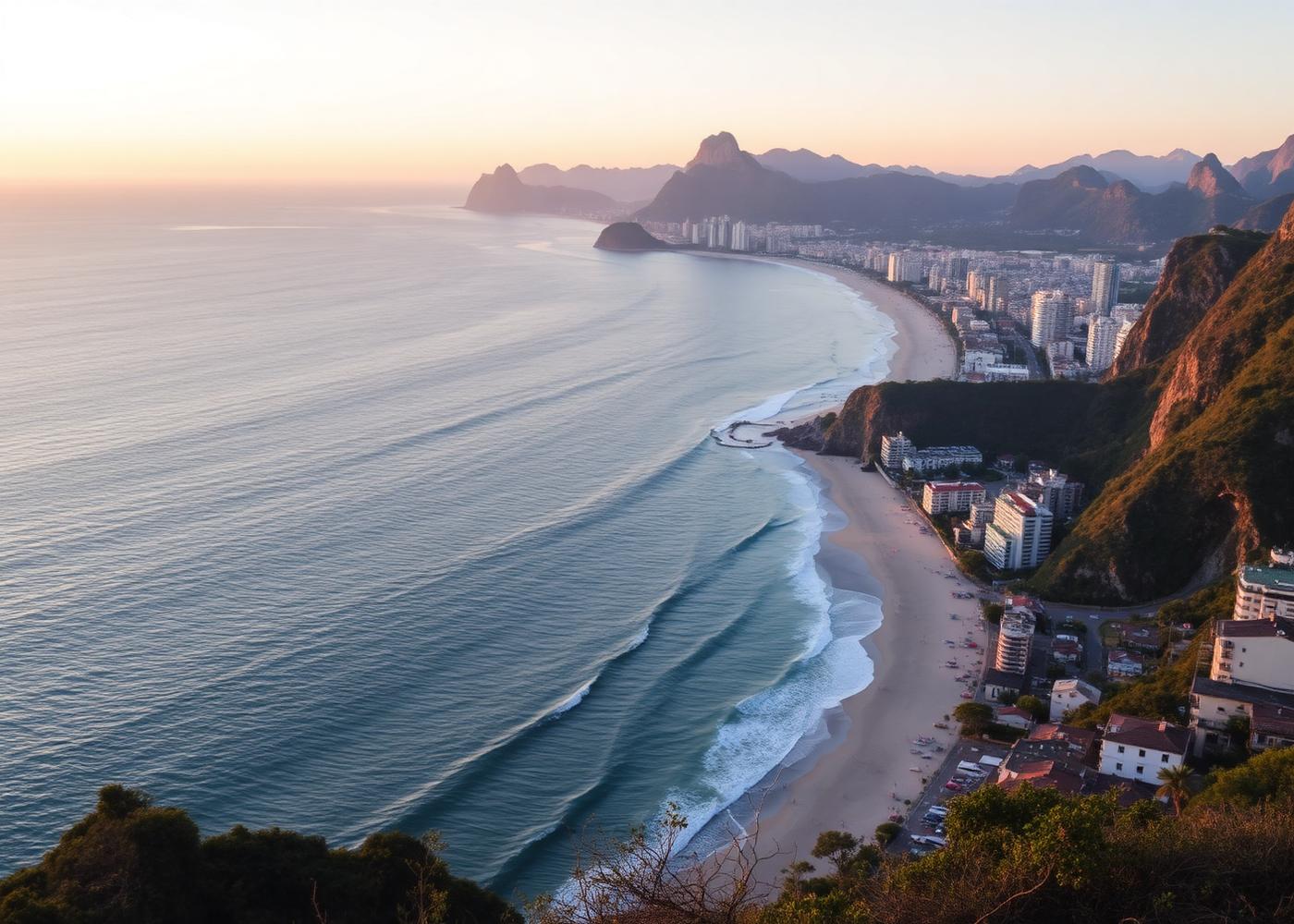
Why a Favela Is Not a Slum
A look behind one of the most misunderstood words about Brazil.
What favelas really are, how they came to be, and why their history is far more than poverty and clichés.
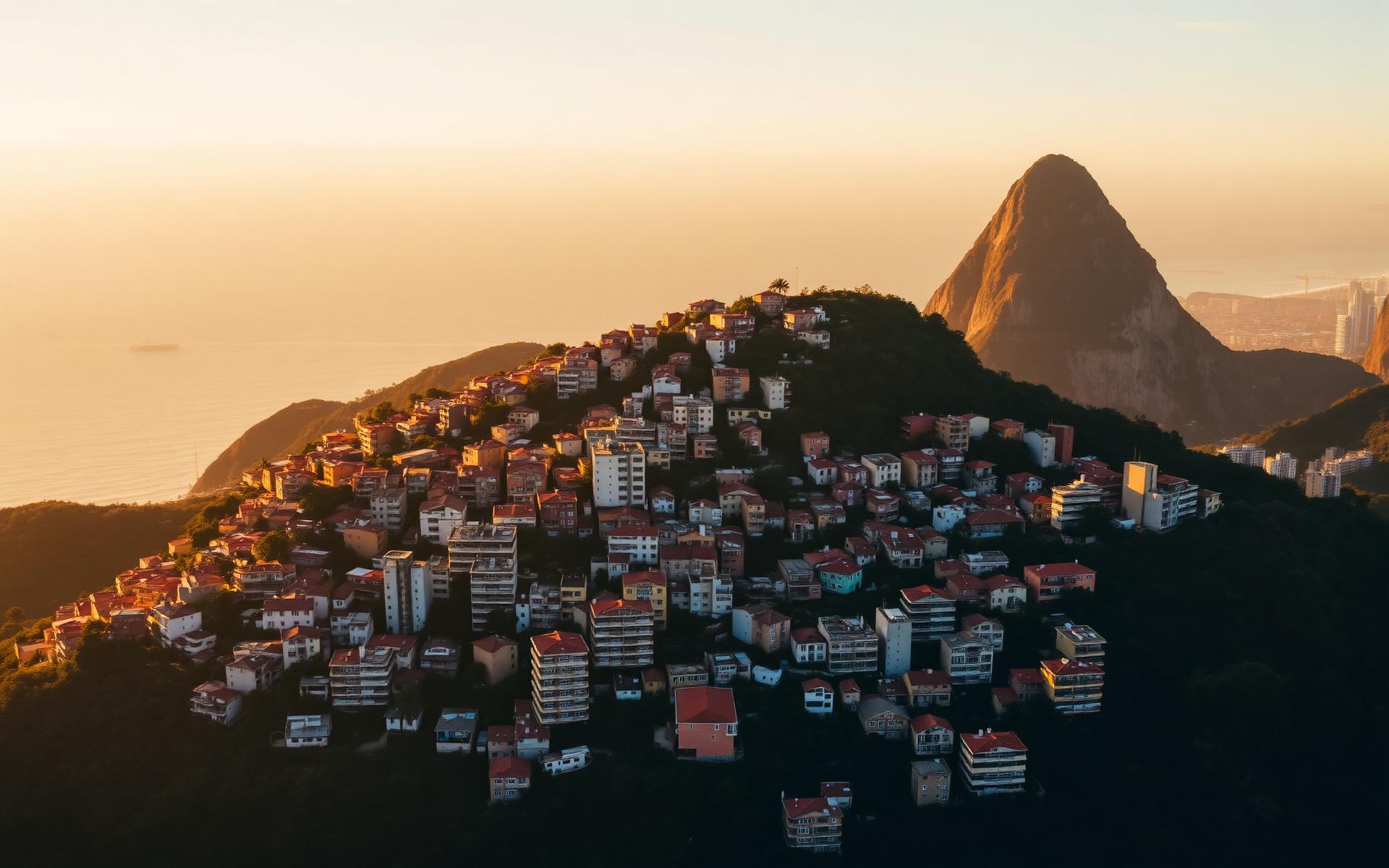
Just after six in the morning, the alley smells of coffee. The bakery has opened, people in work clothes stand at the counter, someone counts out small change. Two streets over, a father straightens his daughter's backpack before she runs up the stairs to school. The barber sweeps the pavement, the mechanic rolls up the shutter, a motorbike courier waits for his first job. Down the hill, a bus stops that will reach one of Rio's most expensive neighbourhoods in twenty minutes.
This scene isn't from any particular neighbourhood. It's everyday life in many of Rio de Janeiro's favelas. And yet, numerous international reports about this very place would use a single word: slum.
Does that word describe what's happening there? Partly. It names real problems: incomplete sewage systems, insecure property rights, unequal services. But it leaves out almost everything else – the place's history, its economy, its neighbourhood, its culture, and the fact that people here have built something over generations.
This article explains what "slum" means, what a favela is, and where the two terms overlap – and where they don't. It romanticises nothing and glosses over nothing. It wants just one thing: to make the distinction precise enough to understand Rio de Janeiro better.
What does “slum” actually mean?
The word "slum" comes from English and has been documented since the early 19th century. It arose in the context of industrial urbanisation, initially as a derogatory description of overcrowded working-class quarters in British cities. From there it moved into international administrative language and, eventually, into urban studies.
Today, "slum" is above all an umbrella term. UN-Habitat, the United Nations' human settlements programme, defines a slum household through a set of measurable characteristics: lack of access to clean drinking water, lack of access to adequate sanitation, insufficient living space per person, poor structural quality, and insecure tenure. A household is considered affected if at least one of these criteria applies.
This definition is useful because it makes comparison possible: it allows housing conditions in Nairobi, Mumbai, Manila, Lima and Rio de Janeiro to be captured using the same indicators. But it is deliberately narrow. It describes deficits in services at the household level – not culture, not history, not belonging, not whether people are rooted in a place.
This is exactly where the misunderstanding begins. Because in everyday use, "slum" functions differently than in statistics. Colloquially, it isn't an indicator but an image: misery, makeshift, danger, hopelessness. That image gets applied to entire neighbourhoods – and, with it, to everyone who lives there.
There's more to it: informal settlements worldwide differ enormously. They vary in age, construction, legal status, size, proximity to the centre, state presence and economic structure. An area that has existed for six months and was built from lightweight materials has little in common with a hundred-year-old, multi-storey neighbourhood – even though both can fall under the same umbrella term.
So the term isn't wrong. It's just very coarse. Anyone who uses it should know how much it lumps together.
What is a favela?
A favela is an informally built settlement in Brazil: constructed without prior planning, without building permits, on land without formal services – and almost always through residents' own labour. That's the physical side. But it only explains the origin, not the current reality.
Because favelas haven't remained construction sites. Most have grown over decades. A shack became a brick house, a brick house became a two-storey building with a concrete roof slab, a footpath became a paved staircase, a cluster of houses became a neighbourhood with a name, boundaries, history and a residents' association. Brazilian urban studies call this process autoconstrução: gradual self-building over one or two generations.
That's why "favela" today means more than a physical condition. The term stands for a particular way a neighbourhood came into being – and for everything that followed from it: a dense local economy, strong neighbourhood ties, distinct cultural institutions such as samba schools and community associations, specific forms of self-organisation, and a particular relationship to the formal city, colloquially called asfalto ("asphalt") in Rio.
Official language has shifted too. Brazil's statistics institute IBGE long used the administrative category aglomerado subnormal – literally "subnormal cluster". After years of criticism, the institute replaced it in 2024 with favelas e comunidades urbanas, meaning "favelas and urban communities". That's more than cosmetic: it's an acknowledgement that these areas are neighbourhoods, not deviations from the norm.
„A favela is not a condition, but a process: built by the people who live there, over decades, layer by layer."
The range matters here. Rio de Janeiro has several hundred favelas. Some have a few hundred households, others tens of thousands of residents. Some sit on expensive beaches, others far out in the Zona Norte. Some have paved main streets, bank branches and supermarkets, others only narrow alleys. Talking about "the favela" is about as precise as talking about "the small European town".
Why are favelas often called slums?
The simplest explanation is translation. Anyone writing for an English-speaking audience looks for a word that is instantly understood. "Favela" requires explanation, "slum" doesn't. The price of that shortcut: everything that makes up the term "favela" – history, self-identification, culture – gets lost along the way.
Then there's the logic of news itself. Coverage tends to focus on events, and events are rarely ordinary life. International media report disproportionately from favelas about police operations, conflicts, disasters and social crises. That's understandable journalistically, but it creates a distorted overall picture: if you only see exceptions, you start to mistake them for the rule.
A third factor is a lack of historical context. Without knowledge of slavery, migration, housing policy and resettlement, a favela can look like an accident or an oversight. With that knowledge, it becomes a comprehensible outcome of concrete political decisions made over more than a hundred years.
Ingrained ways of seeing also play a role. Cities of the Global South are frequently described in Western reporting through deficits – through what's missing, measured against European or North American standards. What works, what was invented locally, what is economically or culturally productive appears far less often.
Finally, tourism plays a part. Some operators market visits precisely through the promise of extremes. Selling a tour as a visit to a "slum" sells a gap. Selling it as a visit to a specific community with a name and a history sells an encounter. The linguistic difference is also an ethical one.
Planned as a side-by-side of documentary images with full source attribution.
To be added with alt text, caption, photographer, source and licence notice. No AI-generated images that imitate documentary photography.
The history of favelas
The story doesn't begin with a hill, but with a law. In 1888, Brazil became the last country in the Americas to abolish slavery. The so-called Lei Áurea freed several hundred thousand people – without land, without compensation, without access to education or the labour market. Many moved to the cities, above all to Rio de Janeiro, then the national capital. Affordable housing didn't exist there.
Those who worked in the city centre lived in cortiços: densely occupied tenement buildings where families shared rooms and sanitary facilities. The city administration increasingly viewed them as a hygiene and public-order problem. Around the turn of the century, urban renewal and demolition campaigns removed housing in the centre without providing replacements. People didn't disappear – they moved to the hillsides.
At the same time, the War of Canudos (1896–1897) was unfolding inland, in which the army militarily destroyed a religiously inspired settlement in the state of Bahia. Returning soldiers waited in Rio for promised payments and housing and settled on a hill near the centre. In memory of the Morro da Favela near Canudos – named after the faveleira plant that grew there – the hill became known as Morro da Favela. Today it is called Morro da Providência and is considered Rio de Janeiro's oldest favela.
From that single place, the word generalised. What was initially a proper name became the generic term for all self-built settlements on Rio's hillsides – and eventually across Brazil.
Growth accelerated in the 20th century. Industrialisation, internal migration – especially from the dry Northeast – and a housing market that remained out of reach for a large share of the working population made the settlements grow. People who worked in the city's hotels, households, ports, construction sites and factories lived wherever they could: close to work, on land nobody was marketing.
In the 1960s and 1970s, urban policy pursued a different strategy: clearance. Numerous favelas were demolished, residents resettled into housing estates on the far periphery – often without jobs, without transport links, without an established community. The resistance to this shaped a generation. In Vidigal, for instance, organised protest prevented a planned clearance in the late 1970s; the story is still seen as a reference point today.
From the 1980s onward, a different approach gradually took hold: upgrading instead of clearance. Programmes such as Favela-Bairro invested in the 1990s in paths, stairs, squares, lighting, sewage systems and health posts. In 2001, the Estatuto da Cidade created legal instruments to regularise informally built housing. Both changed a great deal – and solved nothing entirely.
More recent history is contradictory. The UPP programme, introduced from 2008, permanently stationed police units in selected communities and initially brought noticeable change to several areas, but later lost funding and support. In the run-up to the football World Cup and the Olympic Games, infrastructure projects emerged – alongside new resettlements. Telling the history of favelas always means telling the history of state decisions made about them.
Only with a documented archival source and licence information; historical images are neither re-staged nor generated.
To be added with alt text, caption, photographer, source and licence notice. No AI-generated images that imitate documentary photography.
Timeline
- 1888
Abolition of slavery in Brazil. Hundreds of thousands of freed people receive neither land nor compensation; many move to the cities, where affordable housing is lacking.
- 1890s
Rio grows rapidly. Overcrowded cortiços spring up in the centre, increasingly treated by the city administration as a hygiene problem and partly demolished.
- 1896–1897
War of Canudos in the state of Bahia. The local Morro da Favela later gives the term its name.
- around 1900
A settlement forms on the Morro da Providência in central Rio, home in part to returnees from Canudos. It is considered the city's earliest favela.
- 1904
The "Revolta da Vacina" marks a period of authoritarian urban renewal in which housing in the centre is demolished and poorer residents are displaced.
- 1920s–1940s
Industrialisation and internal migration, especially from the Northeast, accelerate the growth of hillside settlements.
- 1930s
Samba establishes itself as an urban musical form, closely tied to the morros, samba schools and Carnival.
- 1950s–1960s
Favelas keep growing. The first larger infrastructure initiatives appear, while debate over resettlement begins.
- 1960s–1970s
Policy of remoções: numerous favelas are cleared, residents resettled into distant peripheral housing estates. Resistance forms, including in Vidigal.
- 1980s
Resettlement policy loses support. Residents' associations gain influence; at the same time the situation worsens due to organised crime and police operations.
- 1990s
Programmes such as Favela-Bairro focus systematically on upgrading rather than clearance for the first time: pathways, stairs, squares, sewage systems, health posts.
- 2001
The Estatuto da Cidade creates legal instruments for regularising informally built housing.
- 2008
Launch of the UPP programme in selected favelas of Rio.
- 2010s
Infrastructure projects around the football World Cup and the Olympic Games; at the same time, new resettlements and growing criticism of unequal urban development.
- 2024
IBGE officially replaces the administrative term "aglomerado subnormal" with "favelas e comunidades urbanas".
What sets favelas apart from many other informal settlements
The table below sets out typical characteristics side by side. It describes tendencies, not rules: there are favelas to which individual points don't apply, and informal settlements elsewhere that closely resemble Brazilian ones. The comparison doesn't judge, it sorts.
| Dimension | Favela (Brazil) | "Slum" (umbrella term) |
|---|---|---|
| Type of term | A specific Brazilian settlement type with its own name and history | An international umbrella term for areas with precarious living conditions |
| Origin | Self-building following housing shortages, migration and urbanisation, often near the centre | Varies greatly by country: displacement, land occupation, decaying older housing stock |
| Age | Many communities are 70 to 120 years old and have been rebuilt many times | Anything from short-lived makeshift shelter to old established settlements |
| Construction | Predominantly brick and concrete, multi-storey, expanded gradually | Ranges globally from lightweight and salvaged materials to solid construction |
| Ownership | De facto possession, a local property market, partial formal regularisation | Often insecure tenure, in many countries mere occupation without title |
| Location | Often on hillsides and directly next to wealthy neighbourhoods | Often – but not always – peripheral or on leftover land |
| Infrastructure | Electricity, water and internet mostly present; sewage and waste remain weak points | Definitionally characterised by lack of access to water and sanitation |
| Economy | A dense local economy with trade, crafts, hospitality and services | Highly variable, often informally structured |
| Culture | Distinct music, dance and Carnival traditions with national and international reach | As culturally diverse as the countries in which the term is used |
| Identity | The name is used by many residents themselves, sometimes with pride | Almost exclusively a term applied from outside |
| Urban integration | Closely interwoven with the wider city through work, transport and culture | Ranges from integrated to strongly cut off |
| Tourism | Locally run, organised offerings in some communities | Present in few countries, usually more contested |
The most important difference sits in the second-to-last row: identity. "Slum" is practically always a term applied from outside. "Favela" is used by many people themselves – in songs, association names, media projects, brands and everyday conversation. A word people choose for themselves works differently from one that is assigned to them.
Diversity, not clichés
Nothing disproves the slum cliché faster than comparing several communities. The overview below is not a ranking or a judgement – it shows range. All the places listed are in the same city.
| Community | Size | Location | Profile |
|---|---|---|---|
| Rocinha | Very large | Between São Conrado and Gávea | Its own main street, banks, clinics, markets, a pronounced local economy – often described as a city within the city. |
| Vidigal | Medium to large | On a hillside above Leblon and São Conrado | A history of successful resistance to resettlement, panoramic views, cultural projects, and noticeable price pressure. |
| Santa Marta | Small to medium | Botafogo | A funicular railway, brightly painted façades, and early organised community tourism. |
| Morro dos Tabajaras | Small to medium | Between Copacabana and Botafogo | Little tourism, a pronounced neighbourhood structure, striking viewpoints. |
| Babilônia | Small | Above Leme | Directly bordering the Mata Atlântica rainforest, with reforestation and ecotourism projects. |
| Chapéu Mangueira | Small | Above Leme, next to Babilônia | A tightly knit neighbourhood, local eateries, access to the Mirante do Leme viewpoint. |
| Cantagalo / Pavão-Pavãozinho | Medium | Between Copacabana and Ipanema | A panoramic lift, a strong street-art and music scene, a very central location. |
| Complexo do Alemão | Very large, several communities | Zona Norte | A cluster of many neighbourhoods with a cable-car project; historically shaped strongly by security operations and media coverage. |
Differences don't only exist between communities, but also within a single one. In many favelas, a simple rule of thumb applies: the higher up and the narrower the access, the harder services, transport and building quality become. The lower edge of a favela can look barely different, structurally, from the adjoining formal neighbourhood, while conditions a few hundred metres higher up are quite different.
You'll find a complete overview of the communities we've profiled in the favela directory.
A favela is a neighbourhood with everyday life
Anyone who has ever shopped in a favela understands the argument immediately. There are bakeries, greengrocers, butchers, kiosks, phone shops, pharmacies, hair salons, nail studios, workshops, hardware stores, laundries, stationers, bars and restaurants. There are delivery services that navigate stairs and alleys on motorbikes, routes no car was ever built for.
There are schools and kindergartens, public health posts, Catholic churches and evangelical congregations, cultural associations, libraries and tutoring projects, football pitches and sports halls, dance groups, music schools and samba schools. There are residents' associations that mediate disputes, organise repairs, and represent the neighbourhood to the city administration.
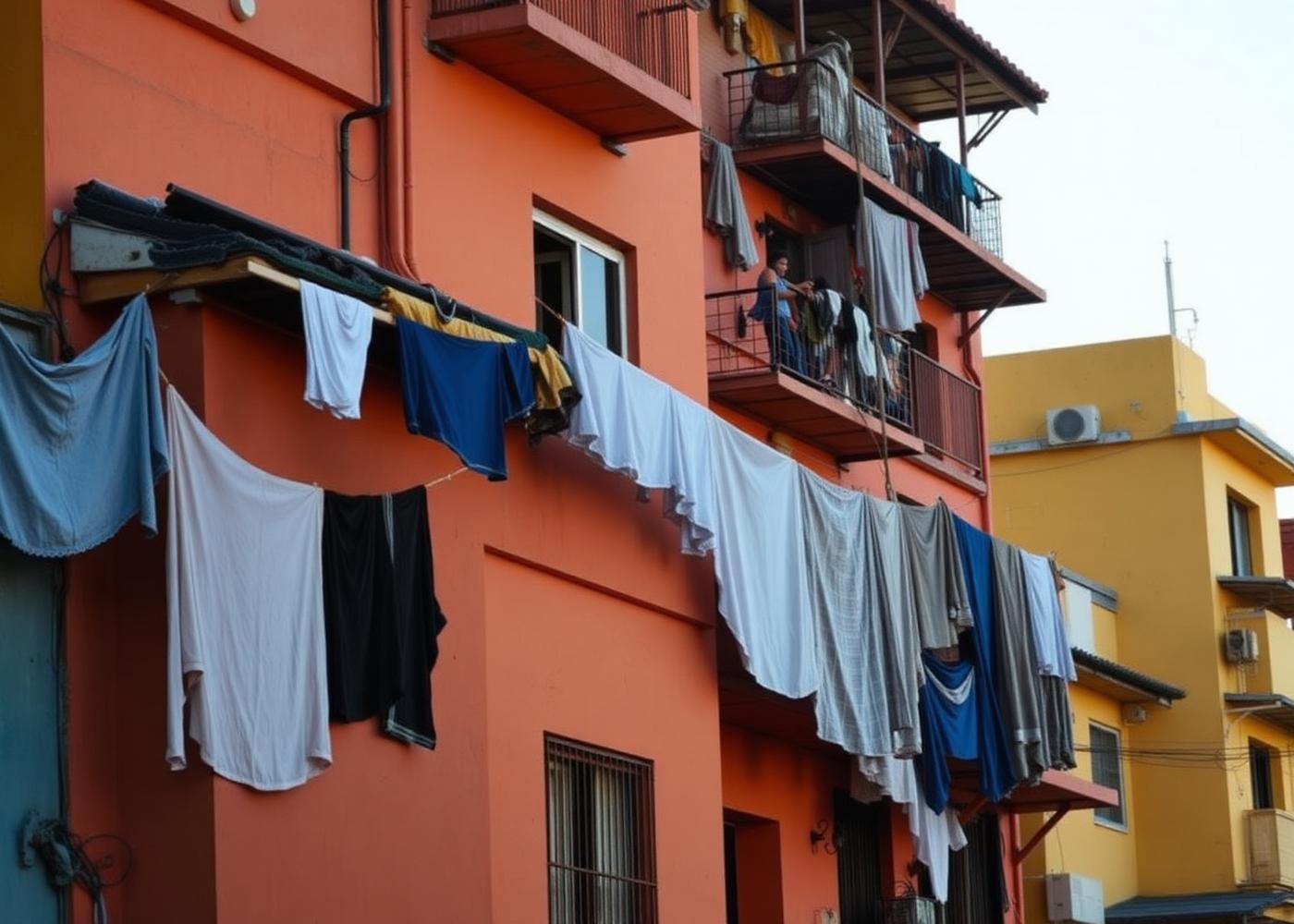
And there is everyday life in the literal sense: neighbours greeting each other; children playing between houses; people sitting on the roof terrace in the evening because that's where the breeze is; laundry hanging between two windows; music from an open window; a television turned up too loud.
This isn't romanticising. The same streets can feel different at night, the same neighbourhood can be thrown off balance by a police operation or heavy rain. But both belong together – and normal life is by far the larger part.
The architecture of self-organisation
Favelas are built processes. Hardly any house was finished in one go; most grew over years, often in step with the family's income. This way of building produces a distinctive visual language found in almost every community.
- Phase 1A simple house with one or two rooms is built, often from readily available materials.
- Phase 2Replacement with brick and mortar; connection to electricity and water, often provisional at first.
- Phase 3A concrete roof slab (laje) as a finish – usable as a terrace, workshop, laundry area and meeting place.
- Phase 4An added storey (puxadinho) for grown children or to rent out; the laje becomes the floor of the next storey.
- Phase 5Densification of the neighbourhood: alleys (becos) and stairs are paved, utility lines retrofitted, façades rendered.
A schematic depiction of a common sequence. Real building processes vary by family, plot and community.
The result is an urban structure that looks chaotic from above and is surprisingly logical from within: stairs follow the shortest route, alleys follow the terrain, shops sit where paths cross, and roof terraces form a second, semi-public layer above the alleys.
At the same time, self-building has its limits. Without structural checks, without fire-safety planning, without regulated drainage, risks arise – especially during heavy rain and on steep slopes. That's exactly why technical advice, regularisation and infrastructure investment are not side issues but central ones. More on this in our piece on the architecture of self-building.
The economy in favelas
The most stubborn misconception about favelas is economic: the assumption that only what comes from outside gets consumed there. In fact, many communities have a dense local economy that carries everyday life – from the breakfast roll to the phone repair.
This includes retail and hospitality, construction and craft businesses, transport and delivery services, hairdressing and beauty businesses, repair workshops, internet providers, water and gas suppliers, daycare, tutoring and sports offerings. Add to that creative businesses: music production, studios, fashion labels, graphic design, photography, dance schools and event organisation.
In some communities, tourism also plays a role – with guides, guesthouses, bars, viewpoints and craft goods. But that only affects a small share of Rio's favelas. For the vast majority, the neighbourhood itself is the most important market.
None of this means poverty doesn't exist. Average incomes are lower than in formal neighbourhoods, informal employment is common, social protection is often patchy, and access to credit is harder. Both things are true at once: economic activity and structural disadvantage.
Culture
Hardly any aspect makes the difference between "favela" and "slum" clearer than culture. What emerged in the morros didn't stay there: it shapes the culture of Rio, of Brazil, and, in part, of pop music worldwide.
Samba. The rhythm developed in the early 20th century among Afro-Brazilian communities in central Rio and in the morros. Neighbourhood gatherings grew into samba schools – today cultural institutions with thousands of members, their own workshops, music schools and annual productions for Carnival. We tell the full story in How samba was born in the morros.
Funk carioca. Out of the Bailes Black of the 1970s, soul imports and Miami bass, a distinct genre emerged from the late 1980s onward that is heard globally today – and was long criminalised. More in Baile funk and Cantagalo.
Hip-hop and rap. Since the 1990s, Rio's communities have had an active rap scene with battles, studios, collectives and youth projects, often tied to education and cultural work.
Street art. Façade projects, murals and colour schemes shape several communities. In Santa Marta and Cantagalo they have become art, a neighbourhood project and part of the tourist identity all at once.
Carnival, religion and neighbourhood festivals. Alongside the great Carnival, countless smaller festivals exist: blocos, church festivals, June festivals, street celebrations around football matches. Catholic congregations, evangelical churches and Afro-Brazilian religions coexist side by side.
Football and sport. Pitches, clubs, futsal halls and boxing projects are central social spaces in many communities – and often the organisational core of youth work.
Gastronomy. From feijoada to churrasco and açaí, to bars with a view: in several communities, food has also become an economic draw for visitors from the rest of the city.
Culture, in this context, is not decoration. It is the strongest evidence that favelas are productive places – not merely places of deprivation.
Challenges
A nuanced picture doesn't mean leaving out problems. It means naming them precisely – without turning them into the whole picture.
- Housing and building quality
Self-building without structural checks, high density, little open space, risks on steep slopes.
- Sewage and drainage
Sewage systems are incomplete in many places; rainwater and wastewater sometimes run through open channels.
- Waste collection
Narrow alleys and stairways make regular collection difficult; collection points aren't sufficient everywhere.
- Social inequality
Unequal access to education, healthcare, formal employment and credit.
- Violence and security
Conflicts between armed groups and police operations affect communities to varying degrees, and shift over time.
- State presence
Present, but unevenly distributed: schools and health posts exist, other services are missing.
- Property rights
Missing or incomplete titles complicate loans, inheritance arrangements and legal certainty.
- Mobility
Steep paths, few roads suitable for vehicles; cable cars and funiculars exist only in specific spots and are not always reliably running.
- Environment
Building on slopes and in protected areas leads to erosion, landslide and conservation conflicts.
- Price pressure
In well-connected locations, rents and purchase prices are rising, which can displace long-standing families.
This list also shows why the term "slum" isn't simply wrong: several of these points match the international criteria exactly. But it also shows why it isn't enough – because not a single point on this list explains how people there live, work and organise themselves.
We have a dedicated, in-depth guide on the security situation: Safety in Rio's favelas.
Why many residents are proud of the term favela
It may seem surprising at first: a word that is viewed negatively internationally is used with confidence by many people. The reason is simple – for them, it doesn't describe deprivation, but origin.
"Favela" stands for a neighbourhood where people know each other. For families who have lived in and expanded the same house for three generations. For music that was born there. For sports clubs, Carnival groups and cultural projects. And for the experience that most of it was built without state help.
This confidence is visible: in media projects from the communities, in association names, in fashion labels, in song lyrics, in art, and in political advocacy. Using the term also means claiming the right to define it.
At the same time, not everyone sees it this way. Some people prefer "comunidade" because they experience the word "favela" as stigmatising – for instance in job applications or dealings with authorities. Others simply use the name of their neighbourhood. There is no single, unified stance, and it would be wrong to claim otherwise.
„A term that people choose for themselves works fundamentally differently from one that is assigned to them from outside."
International comparisons
Informal settlements exist in many countries, and each has its own terms. Comparison helps understanding – but only if the differences are read along with it.
- Barrio (Latin America)
Simply means "neighbourhood" and is neutral. In some countries, and in US colloquial usage, additionally associated with low-income neighbourhoods.
- Villa miseria (Argentina)
Informal settlements mainly in greater Buenos Aires; unlike "favela", the name already carries a judgement within it.
- Township (South Africa)
Arose through state-enforced racial segregation and deliberate displacement, usually on the urban periphery – a different mechanism of origin than in Rio.
- Gecekondu (Turkey)
Literally "built overnight"; refers to a legal tradition in which already-inhabited buildings were harder to demolish.
- Bidonville (Francophone countries)
From "bidon", meaning canister: named after building materials, defined through construction method.
- Kampung (Indonesia)
Originally a village-type settlement, become dense neighbourhoods in cities – often with strong local organisation.
- Bustee (South Asia)
Densely built residential areas, especially in and around Kolkata, with their own legal and administrative history.
Comparisons are useful because they show that informal housing is not a uniquely Brazilian phenomenon, but a worldwide consequence of urbanisation, migration and a lack of affordable housing. But they have limits, because each of these words carries a different history – legally, politically and linguistically. Lumping them all together under "slum" saves explanation and loses meaning.
Language shapes perspective
Terms aren't labels stuck onto an unchanged reality. They help decide what you perceive in the first place. Anyone who hears "slum" expects deprivation and looks for it – and finds it. Anyone who hears "Favela Santa Marta" expects a place with a name and is more likely to ask what it's actually like there.
That's why Inside Favela deliberately writes with nuance: we call communities by name, we describe problems concretely rather than sweepingly, and we don't generalise from one community to all. At the same time, we avoid the opposite – romanticising, which turns poverty into authenticity and improvisation into folklore.
Language here should neither gloss over nor stigmatise. The test is simple: would a resident recognise the description of her neighbourhood as accurate? If not, the wording is wrong.
Myth or reality
All favelas are slums.
Favelas are historically and culturally distinct urban communities. Some characteristics overlap with the international slum definition, others do not.
There is no infrastructure in favelas.
Electricity, water, internet, schools and health posts exist in many communities. The level of provision, however, varies greatly – sometimes even within a single favela.
No one wants to live there.
Many families have lived there for generations, built their own homes, and identify with their neighbourhood.
Favelas consist only of poverty.
Alongside social challenges, there is culture, entrepreneurship, associations and very different income levels.
Favelas are lawless spaces.
There is administration, addresses, contracts, businesses, schools and residents' associations. State presence is unevenly distributed, but not absent.
All favelas are the same.
There are worlds of difference between a community with a few hundred households and an area with tens of thousands of residents – in location, building stock, economy and daily life.
Favelas are on the outskirts of the city.
In Rio, many favelas are centrally located, some directly next to expensive neighbourhoods such as Copacabana, Ipanema or Botafogo.
Anyone living in a favela doesn't work formally.
Many residents have regular employment contracts; informal work is common, but not something unique to favelas.
Favela houses are shacks.
Most of the building stock today consists of brick and concrete structures, often multi-storey and built up gradually over years.
Favelas are a temporary phenomenon.
Many communities have existed for over a hundred years and are a permanent part of Rio's urban history.
Culture from favelas is a niche phenomenon.
Samba, funk carioca, passinho, Carnival traditions and street art shape the culture of Rio and Brazil as a whole.
Without tourism there would be no economy there.
Tourism plays a role in only a few communities. The local economy is based overwhelmingly on trade, crafts, services and hospitality for the neighbourhood.
Voices from the communities
The most important part of this topic can't come from the editorial team. That's why we're building an interview series in which people describe, in their own words, what the term means to them. Until those conversations are conducted and authorised, we deliberately leave empty spaces here – we do not invent quotes.
Residents of various communities
Historians on Rio's urban history
Architects and urban planners on self-building
Social workers and project leaders
Artists and musicians
Entrepreneurs from the communities
Journalists from local media projects
If you're from a community and want to contribute, you can reach the editorial team at info@insidefavela.com.
How travellers can talk about favelas respectfully
No complicated rules are needed, just a little precision. Three principles go a long way: be specific rather than sweeping, describe rather than judge, don't turn people into a backdrop.
| Instead of | Better | Why |
|---|---|---|
| "I visited a slum." | "I visited the favela of Santa Marta." | Names the place instead of a category. |
| "The people there are poor." | "The community has very varied income levels." | Avoids a blanket statement about all residents. |
| "It was dangerous." | "We went with a guide from the community." | Describes your own situation rather than a sweeping judgement. |
| "There's nothing there." | "Infrastructure varies a lot from street to street." | Sticks to observation. |
| "Authentic misery." | "A densely built, lively neighbourhood." | Doesn't turn poverty into a sight to see. |
| "Slum tour" | "Community tour in Vidigal" | Names the destination and operator instead of a cliché. |
If you're planning a visit, you'll find practical guidance in our safety guide as well as in our profiles of Santa Marta, Rocinha and Babilônia.
Glossary
- Favela
- An informally built, self-constructed settlement in Brazil, with its own history, neighbourhood structure and culture.
- Comunidade
- Portuguese for community; a commonly used, less loaded term for a favela.
- Morro
- Hill. In Rio, also shorthand for a favela located on a hillside.
- Asfalto
- Literally "asphalt"; colloquial term for the formal city below the morros.
- Slum
- International umbrella term for residential areas with precarious conditions; defined in urban studies through characteristics such as water, sanitation, building standards, space and legal security of tenure.
- Informal settlement
- A settlement that arose outside formal planning and permitting processes.
- Aglomerado subnormal
- Former administrative term used by the statistics institute IBGE, replaced in 2024 by "favelas e comunidades urbanas".
- Autoconstrução
- Self-building: the gradual construction and expansion of one's own house over years.
- Puxadinho
- An extension or added storey that expands an existing house.
- Laje
- A flat concrete roof slab that serves as a terrace, workspace, meeting point and foundation for a further storey.
- Beco
- A narrow alley between houses; a typical access route in densely built favelas.
- Regularização fundiária
- Legal regularisation of land and home ownership in informally built areas.
- Estatuto da Cidade
- Brazil's City Statute of 2001; a legal framework that, among other things, allows recognition of informal housing.
- Remoção
- Forced resettlement; a policy that particularly shaped urban policy in the 1960s and 1970s.
- Associação de Moradores
- Residents' association; a local self-governance structure with representative and organisational functions.
- Mutirão
- A collective self-help effort in which neighbours build together or create infrastructure.
- UPP
- Unidade de Polícia Pacificadora; a programme of permanently stationed police units introduced from 2008.
- Cortiço
- A densely occupied tenement building, historically found in central Rio; considered a precursor to the favelas.
Frequently asked questions
Is a favela a slum?
Only partly. "Slum" is an international umbrella term for settlements with precarious living conditions. Some favelas meet individual criteria of that definition, many others only partially. "Favela", by contrast, refers to a specific Brazilian type of settlement with its own history of origin, legal situation, culture and neighbourhood structure. The umbrella term describes part of the reality, but not the whole.
Why is a favela called a favela in the first place?
The name goes back to the faveleira, a hardy plant from Brazil's arid Sertão region. It grew on the Morro da Favela in the Canudos region of the state of Bahia. Soldiers who returned to Rio after the War of Canudos (1896–1897) and were left waiting for promised housing settled on a hill in the city centre that later became known as Morro da Favela – today's Morro da Providência. From that one place, the term spread and generalised.
Are all favelas poor?
No. Income, building quality and infrastructure vary enormously – between favelas and within a single favela. In many communities, families with very low incomes live alongside lower- and middle-class households, as well as self-employed people, salaried workers, retirees and entrepreneurs. Poverty is a theme, but not a complete description.
Are all favelas dangerous?
No, and blanket statements are misleading. The security situation varies considerably by community, time of day and current circumstances, and can change at short notice. Some favelas are set up for tourism and visited regularly, others are not. Only an up-to-date, local assessment is reliable – more on this in our safety guide.
Why do people live in favelas?
The reasons are diverse: many families have lived there for several generations, effectively own their homes, and are rooted in the neighbourhood, church, associations or work. Others move there because of location: many favelas are centrally located and close to jobs, while formal housing in the same neighbourhoods is unaffordable. Rent levels, family networks and belonging also play a role.
Can you visit favelas?
In some communities, yes – with a local guide and after checking the current situation. In others, a visit is not appropriate. What matters is guides from the community, small groups, restraint when taking photos, and a willingness to follow local rules.
Is there property ownership in favelas?
There is possession, buying, selling, renting and inheritance – but the formal legal situation is inconsistent. Many houses are not fully registered in the land registry; at the same time, locally recognised sales contracts exist, along with municipal regularisation programmes in some areas. A real estate market functions in practice, even if much of it remains legally incomplete.
How do favelas come into being?
Historically, through a combination of housing shortages, migration, a lack of affordable housing and self-building. People first build simple houses, improve them over the years, connect to water and electricity, organise paths and stairways, and form neighbourhood structures. Over decades, provisional settlements become dense, organically grown neighbourhoods.
Why do international media use the word "slum" so often?
Because it's short, is instantly understood internationally, and fits neatly into news logic. Translation compresses meaning: "favela" carries history, culture and self-identification with it, while "slum" mostly conveys deprivation. Add to that a lack of historical context and an outside perspective that frequently describes cities of the Global South in terms of deficits.
Is "slum" a slur?
No. The term is established in urban studies and international policy, for instance at UN-Habitat, where it describes measurable characteristics. It becomes problematic when it is used in everyday speech as a label for people and their neighbourhood, blotting out everything beyond deprivation.
What is the difference between a favela and a barrio?
"Barrio" simply means "neighbourhood" in Spanish and is neutral. In some countries, and in parts of US colloquial usage, the term has additionally become associated with low-income or immigrant neighbourhoods. "Favela", on the other hand, always refers to an informally built Brazilian settlement – not just any neighbourhood.
What distinguishes a favela from a township?
Townships in South Africa arose essentially through state-enforced racial segregation: people were deliberately pushed into designated areas on the urban periphery. Favelas, by contrast, arose largely without planning, often close to the centre, and out of individual initiative. Both are the result of structural inequality, but the mechanisms behind their creation differ.
Why do many residents identify with the term favela?
Because for many it doesn't mean deprivation, but origin: neighbourhood, family, music, sport, self-organisation, and the experience of having built something without state help. Movements, media projects and artists from the communities use the word with confidence. That said, this isn't true for everyone: some people prefer "comunidade" or simply the name of their neighbourhood.
What does "comunidade" mean?
"Comunidade" means community and is often used in Brazil as a less loaded term for favela – including by residents themselves. Some value it because it emphasises social cohesion. Others criticise it as a euphemism, because it makes the structural problems linguistically invisible.
Which well-known favelas are there in Rio de Janeiro?
Among the most internationally known are Rocinha, Vidigal, Santa Marta, Cantagalo and Pavão-Pavãozinho, Babilônia and Chapéu Mangueira, Morro dos Tabajaras, as well as the Complexo do Alemão and Cidade de Deus. Fame says nothing about representativeness: Rio has several hundred favelas of very different sizes.
How many people live in Rio's favelas?
According to surveys by the Brazilian statistics institute IBGE, roughly one fifth of the population of the city of Rio de Janeiro lives in favelas, or in the areas officially classified since 2024 as "favelas e comunidades urbanas". Exact figures vary depending on the definition and survey year used.
Do favelas have electricity, water and internet?
Mostly, yes, though quality varies greatly. Electricity and water connections are widespread, but outages and pressure problems are common. Internet is well available in many communities via local providers; sewage disposal and stormwater management, on the other hand, are often the biggest unresolved issues.
Are favelas illegal?
They arose informally, but they are not lawless. Many areas have been recognised over decades, incorporated into city plans, connected to infrastructure and, in part, legally regularised. The Brazilian constitution and the 2001 City Statute contain instruments for legally securing informally built housing.
What is the difference between a favela and a cortiço?
A cortiço is a densely occupied tenement building, historically found mainly in the city centre – a form of overcrowding within the formal housing stock. A favela, by contrast, is an independently formed settlement, usually on hillsides or unused land. The cortiços of the 19th century are considered a precursor to the favelas.
Why are many favelas located on hillsides?
Because steep hillsides were long considered unbuildable and were therefore neither developed nor sold at a premium. Those who needed to live close to the centre but could not afford formal housing built there instead. In Rio, this is compounded by the fact that the city is topographically criss-crossed by morros – hills often sit directly next to expensive neighbourhoods.
Are favelas integrated into the urban fabric?
Partly. Many favelas are connected via buses, the metro, cable cars or funiculars, residents work throughout the city, and culture from the communities shapes Rio as a whole. At the same time, differences persist in waste collection, sewage systems, public services and formal addressing.
What was the UPP programme?
The Unidades de Polícia Pacificadora were a programme introduced in Rio from 2008 that permanently stationed police units in selected favelas. In the early years, several communities saw measurable improvements; later the programme lost funding, support and effectiveness. Its overall record is still assessed differently by different observers.
Is it okay to take photographs in favelas?
Landscapes and views, generally yes; people, only with consent. Close-up shots of homes, children, or situations that turn poverty into a backdrop should be avoided. If in doubt, ask – and accept a no.
Is favela tourism ethically justifiable?
That depends on how it is organised. Tours with guides from the community, small groups, opportunities to support local businesses, and no display of people as spectacle can create income and correct misconceptions. Bus tours through narrow alleys, photo stops in front of people's homes, and operators without local involvement, on the other hand, are problematic.
How can travellers speak respectfully about favelas?
Be specific rather than sweeping: use the name of the community instead of "slum", describe rather than judge, and rely on your own observation rather than generalising statements about "the people there". So not "I visited a slum", but "I visited the favela of Santa Marta".
Is the term favela used officially in Brazil?
Yes. Since 2024, the statistics institute IBGE has officially used the category "favelas e comunidades urbanas", replacing the older administrative term "aglomerado subnormal". The change was made partly because the old term was criticised as pejorative.
Are favelas changing?
Constantly. Houses gain extra storeys, businesses open and close, infrastructure programmes come and stall, rents rise in well-connected locations, and communities organise cultural and environmental projects. Describing a favela as it was twenty years ago is not describing the present.
Conclusion
A favela is far more than a synonym for poverty. It is a historically grown neighbourhood, born of housing shortages and migration, built through residents' own labour, shaped by neighbourhood ties, a local economy and a culture whose influence reaches well beyond Rio – and, at the same time, burdened by real social challenges.
"Slum" as an umbrella term can name parts of this reality, especially where water, sanitation, building quality and legal security of tenure are concerned. For everything else, it is too coarse. Anyone who wants to understand favelas should look beyond simple labels: at the history, at the differences between communities, and at the people who have lived there for generations.
„Anyone who sees only the word "slum" often overlooks the people, their history and their culture."
Sources, author and updates
- Author: Lucas Berger
- Published: 28. Juni 2026
- Last editorial review: 31. Juli 2026
- Expert review: urban history, urbanism, community journalism
- Corrections: info@insidefavela.com
- IBGE – surveys and the terminology change to "favelas e comunidades urbanas" (2024)
- UN-Habitat – definition and indicators of informal settlements
- Estatuto da Cidade (Law 10.257/2001) on regularising informal housing
- University research on urban history and urbanism (including UFRJ, PUC-Rio)
- Historical archives and collections on Rio de Janeiro's urban history
- Documentation of municipal programmes such as Favela-Bairro
- Interviews with residents, historians, architects and social scientists
- Media projects from the communities
- 28. Juni 2026 – Initial publication
- 31. Juli 2026 – Full revision: added terminology section, timeline, comparison tables, glossary, FAQ and sources section
We flag where research allows for different interpretations, and we avoid figures that cannot be substantiated. We take reports of errors or missing context seriously and document corrections here.